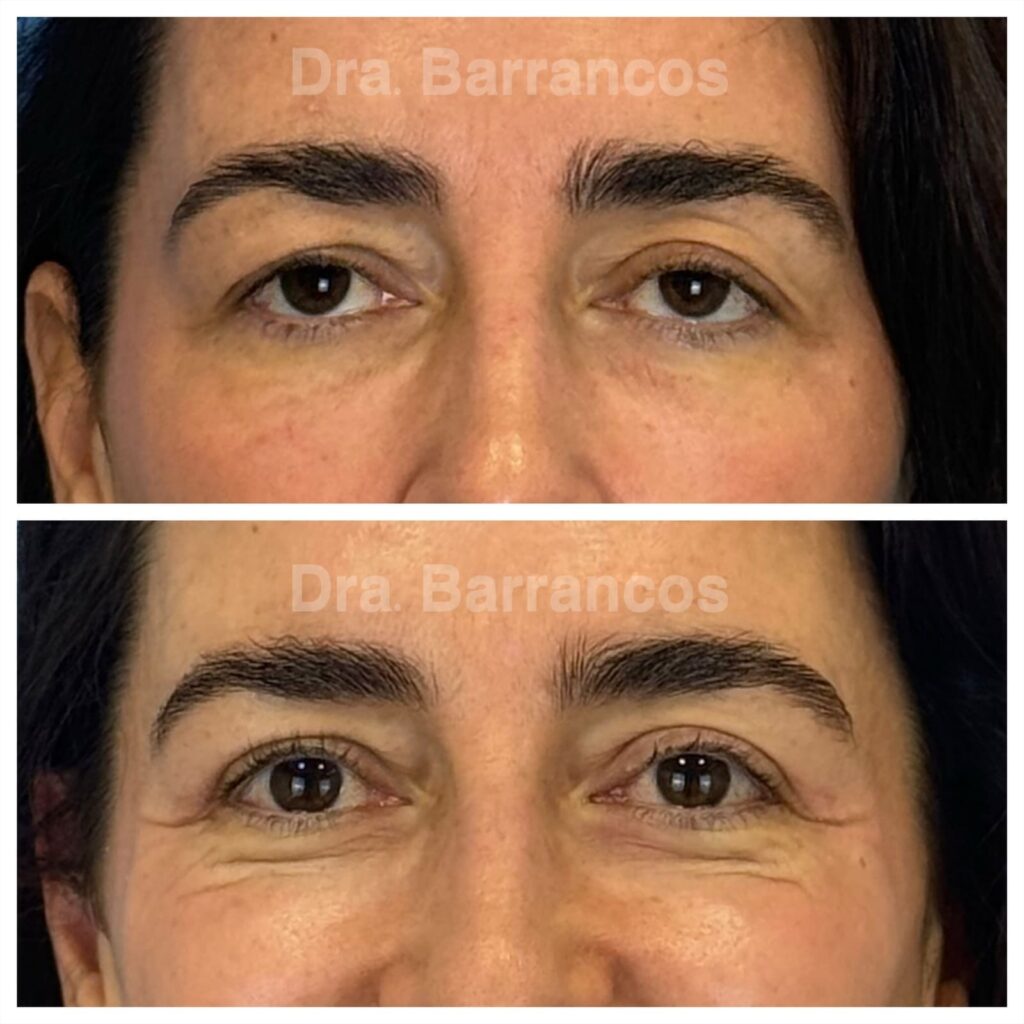
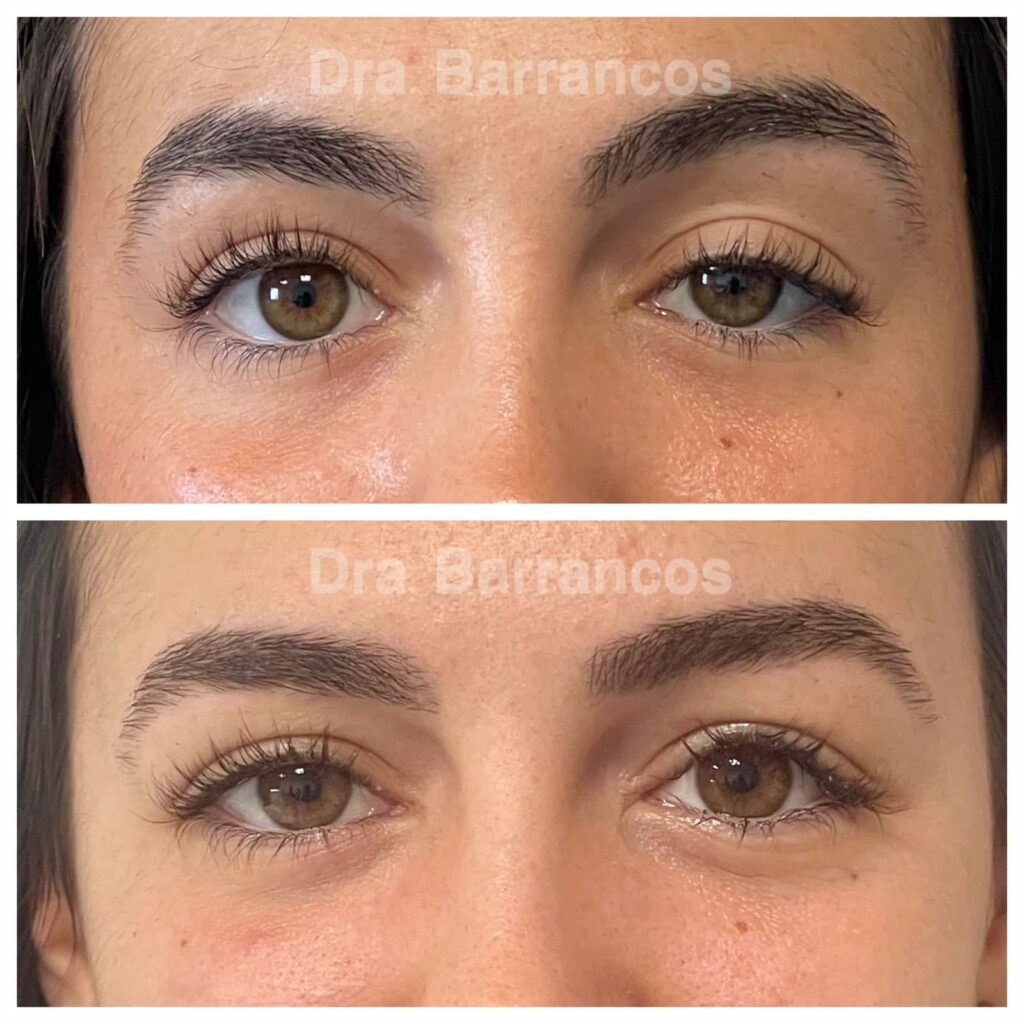
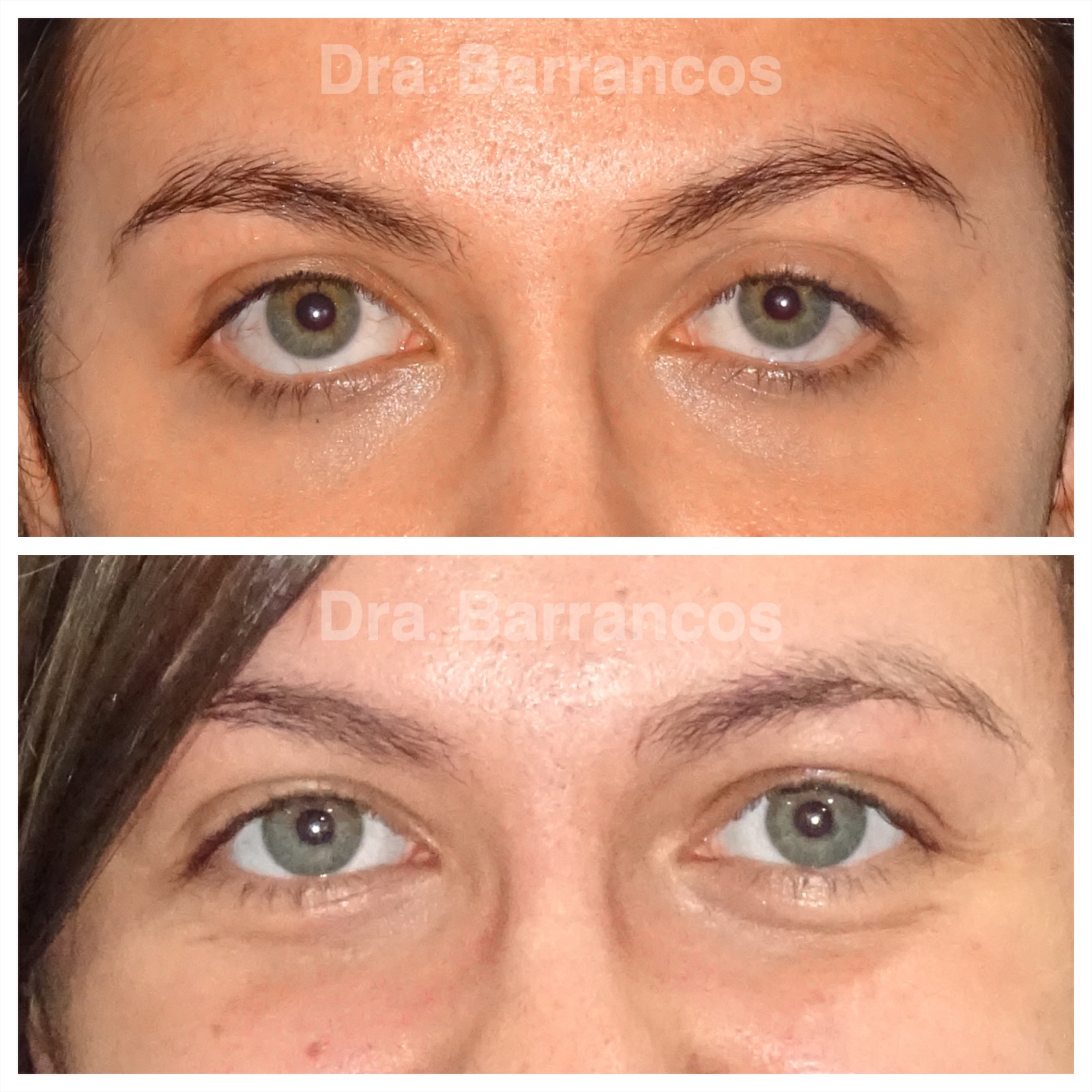
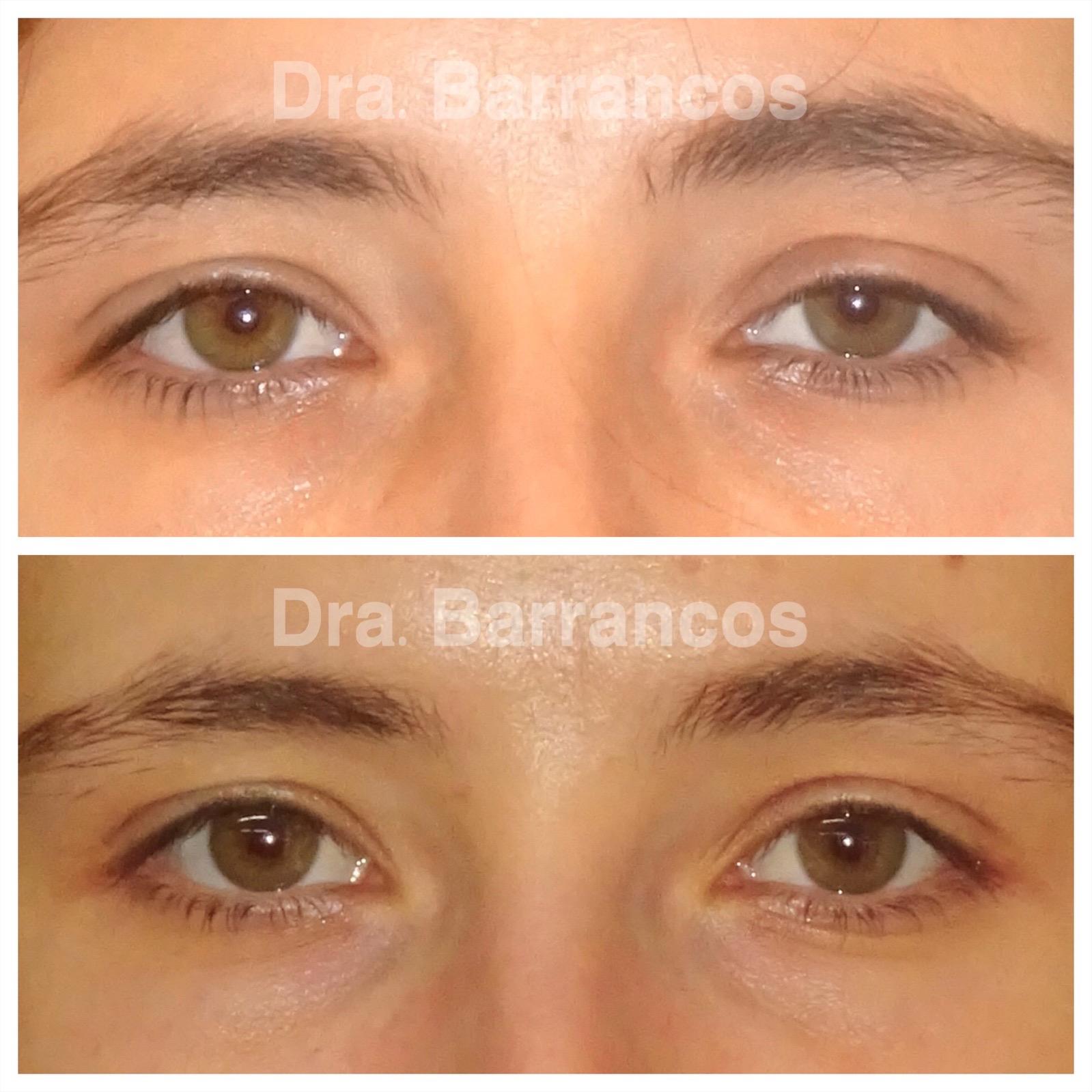
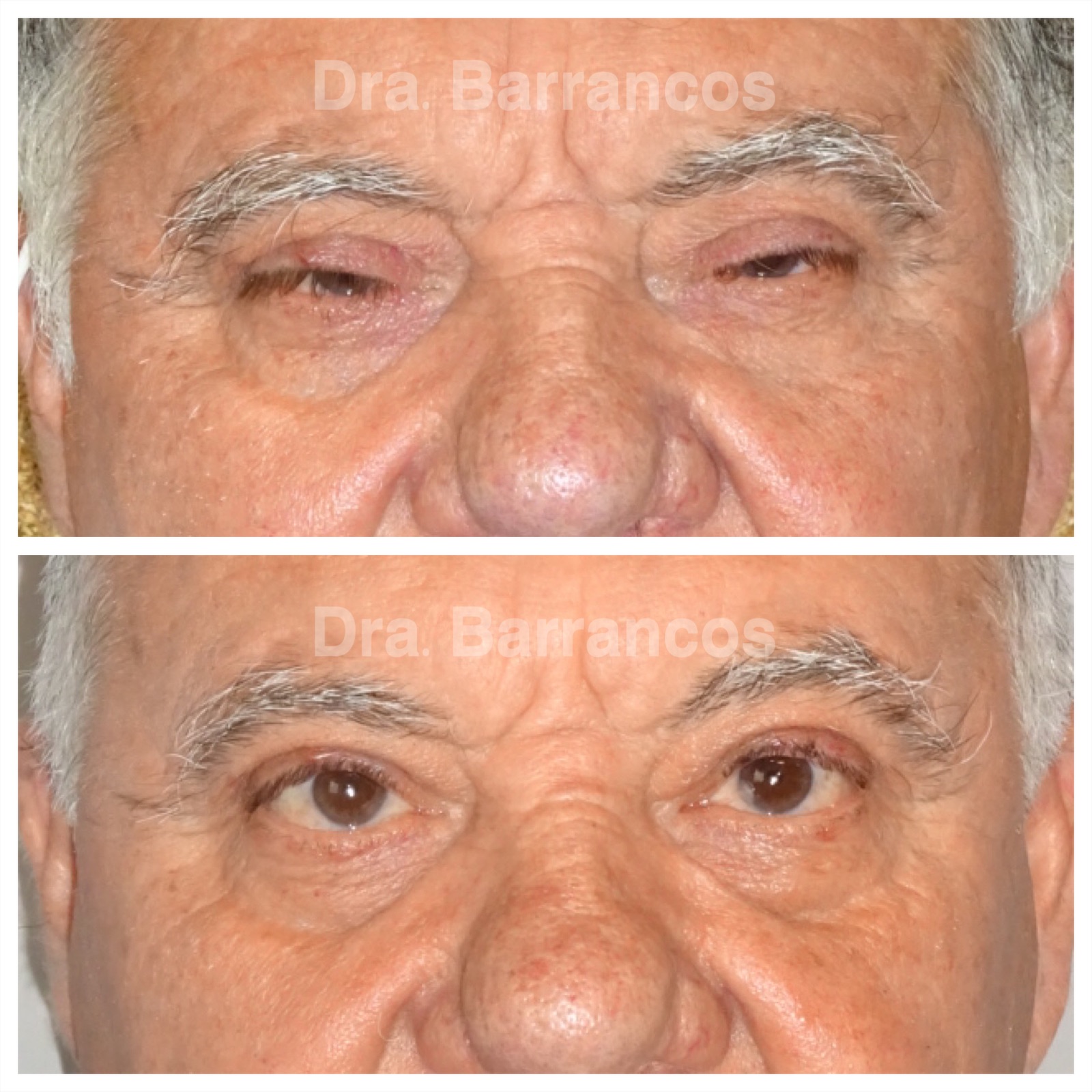
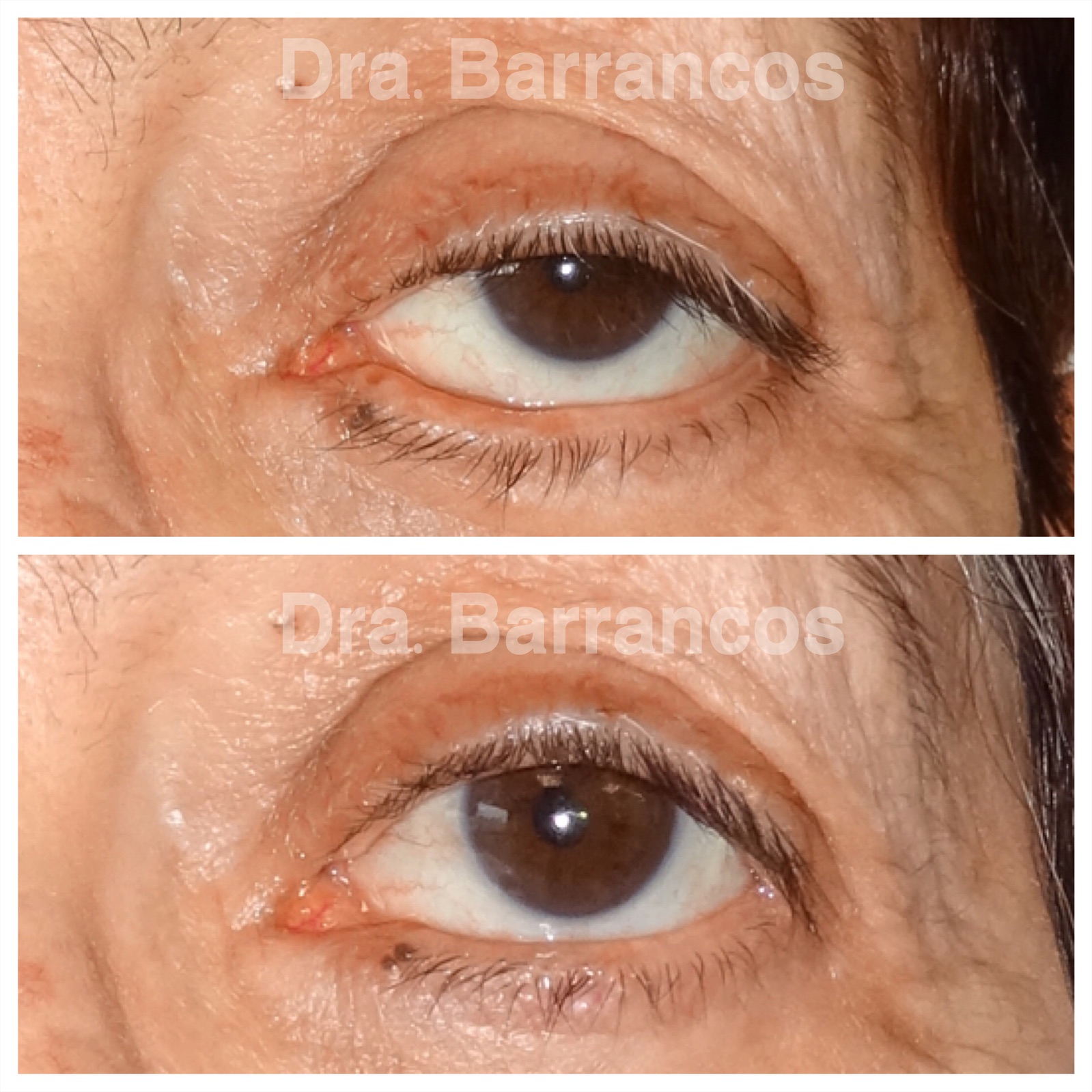
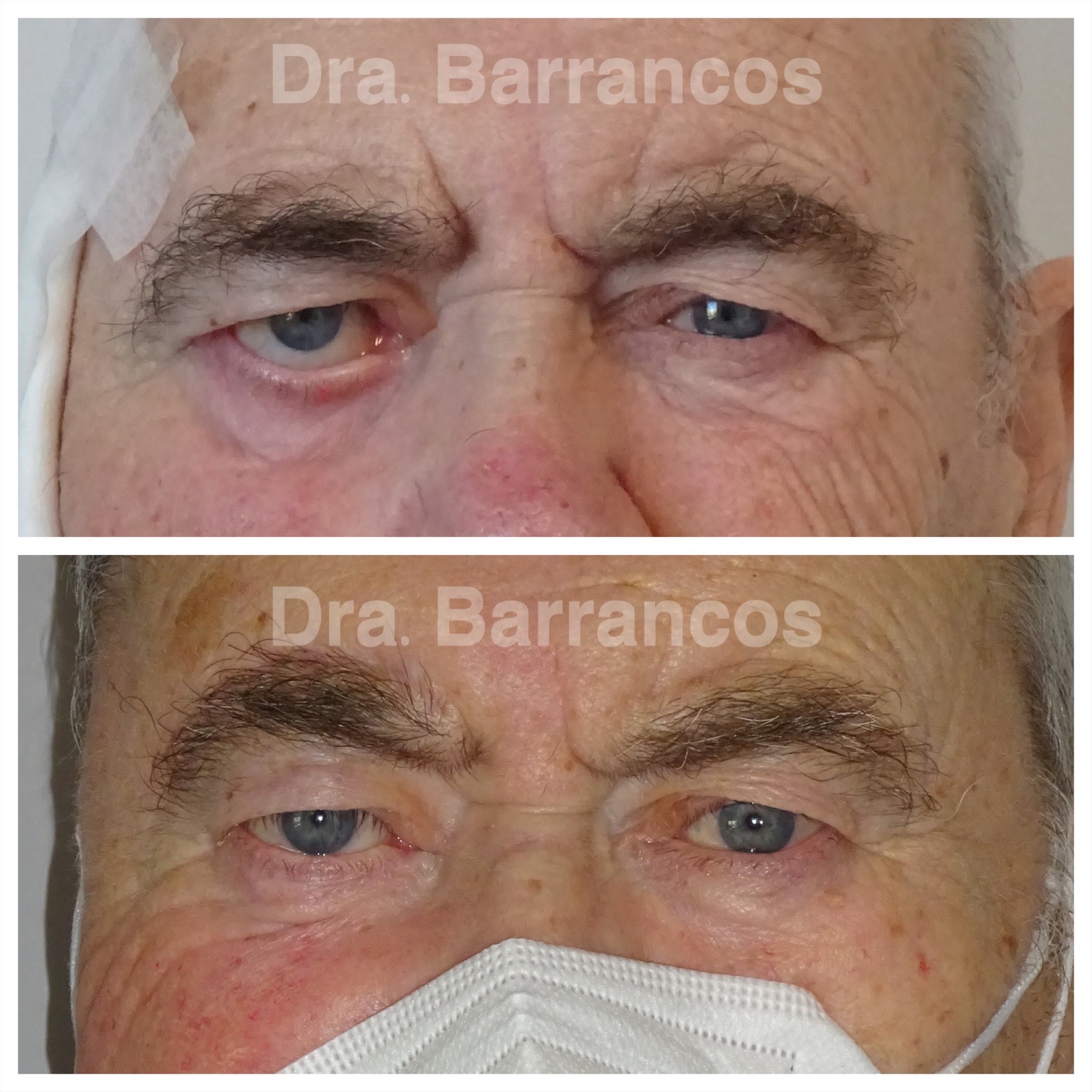
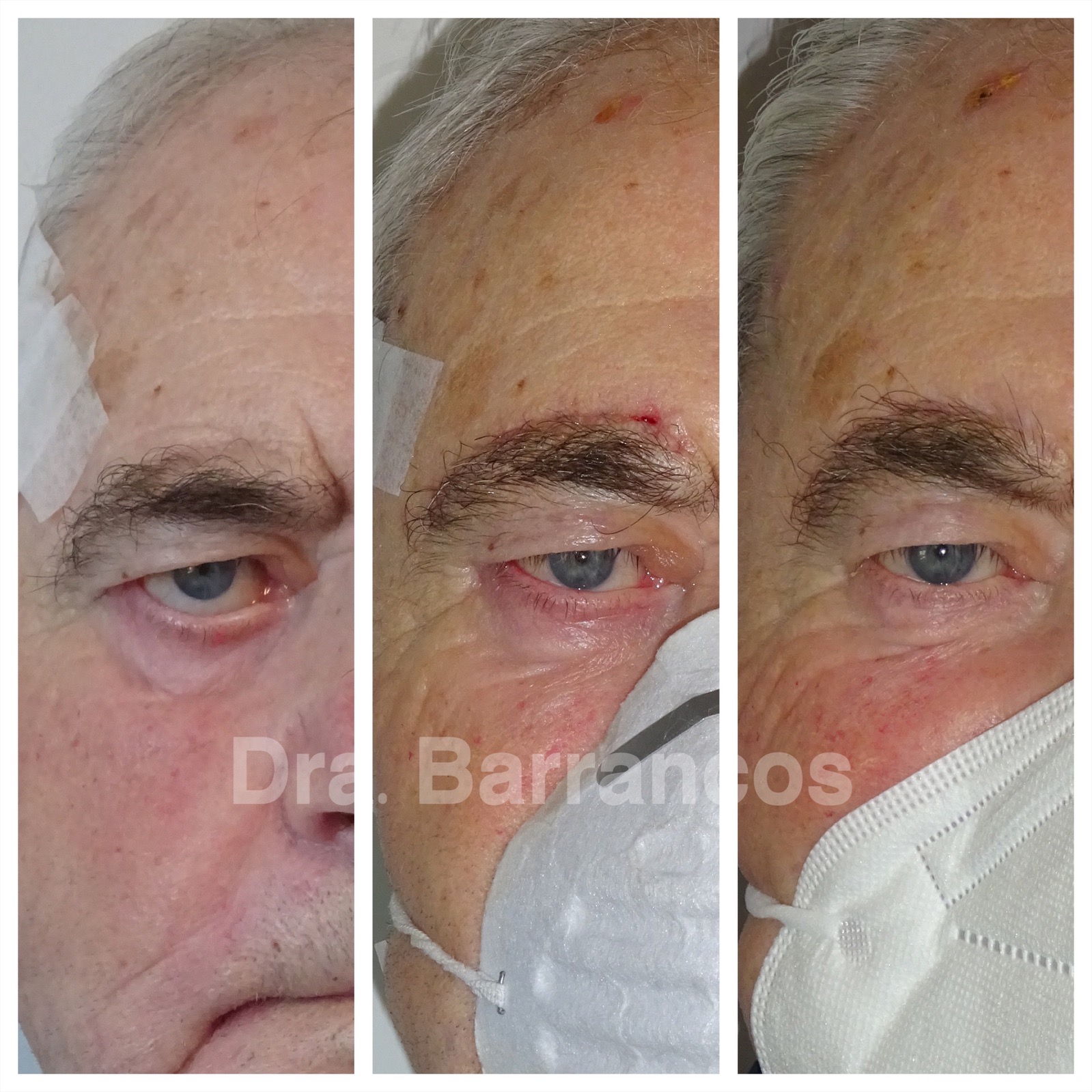
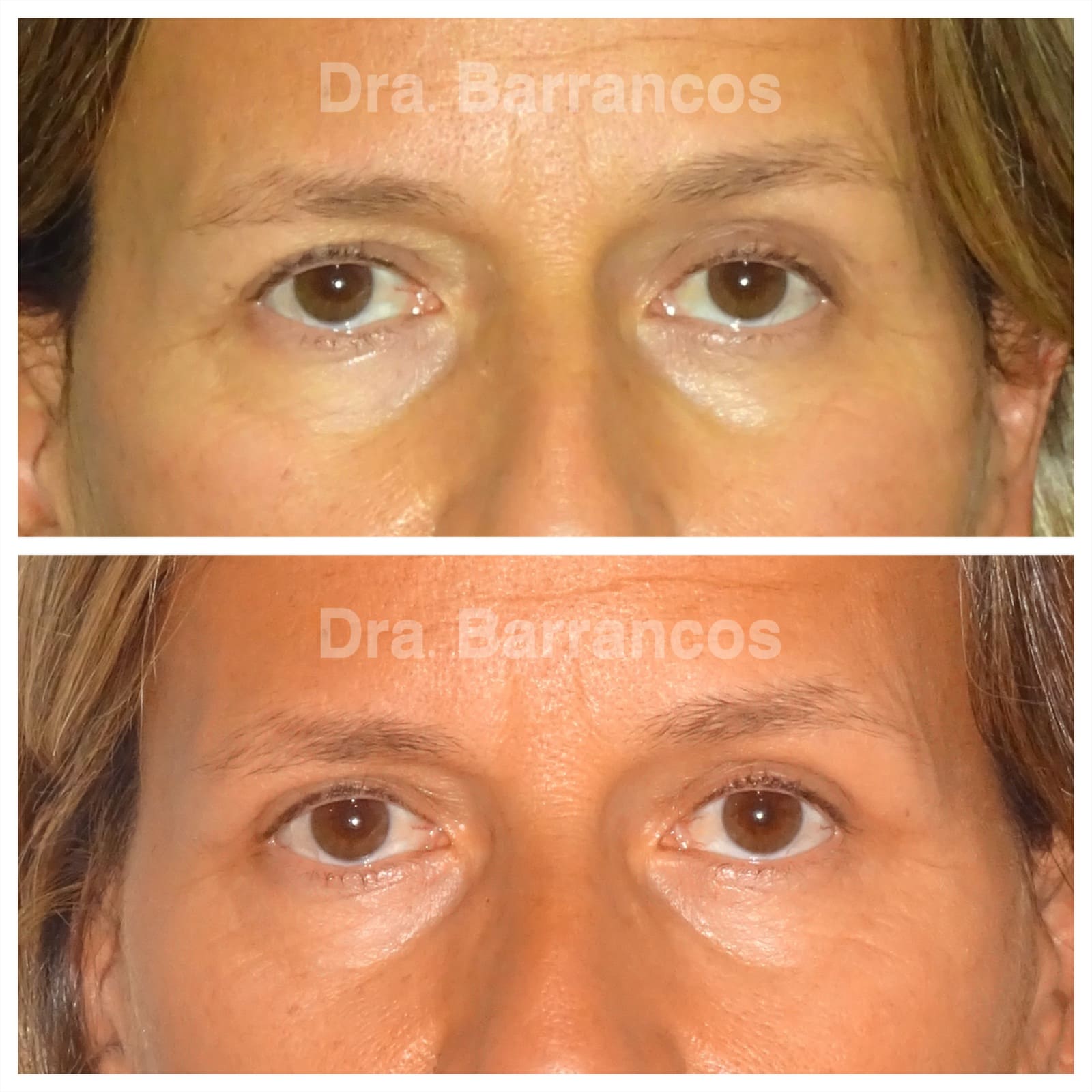
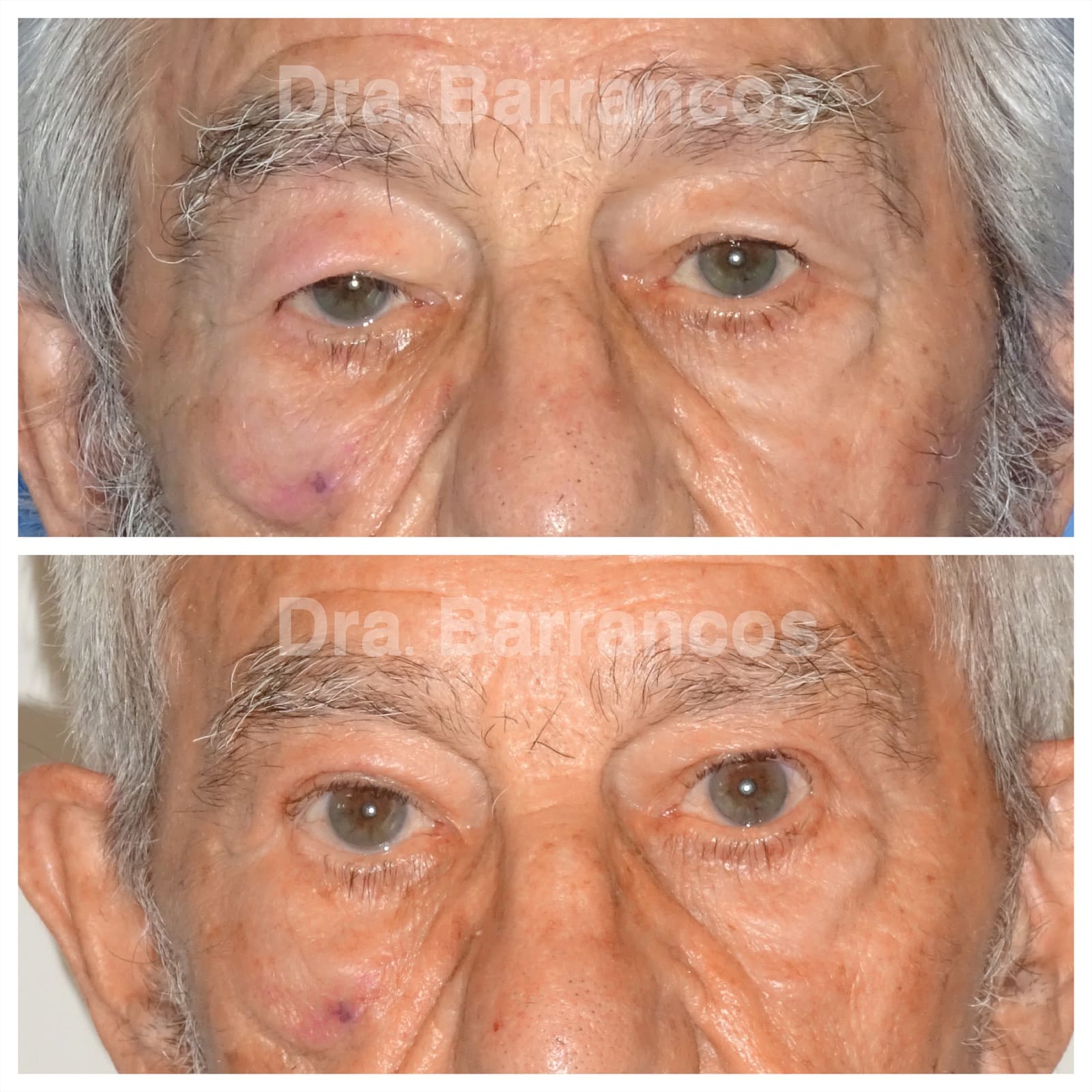
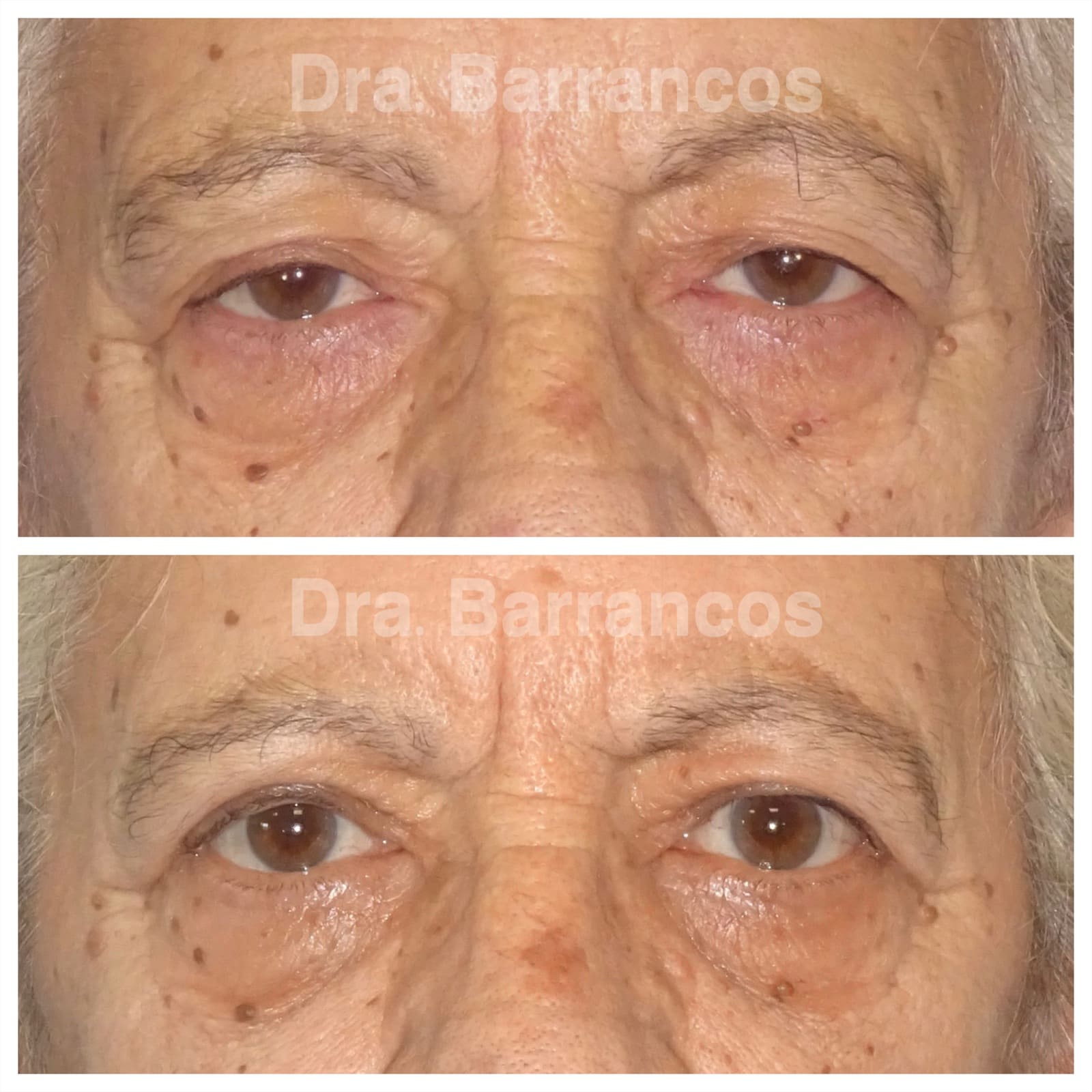
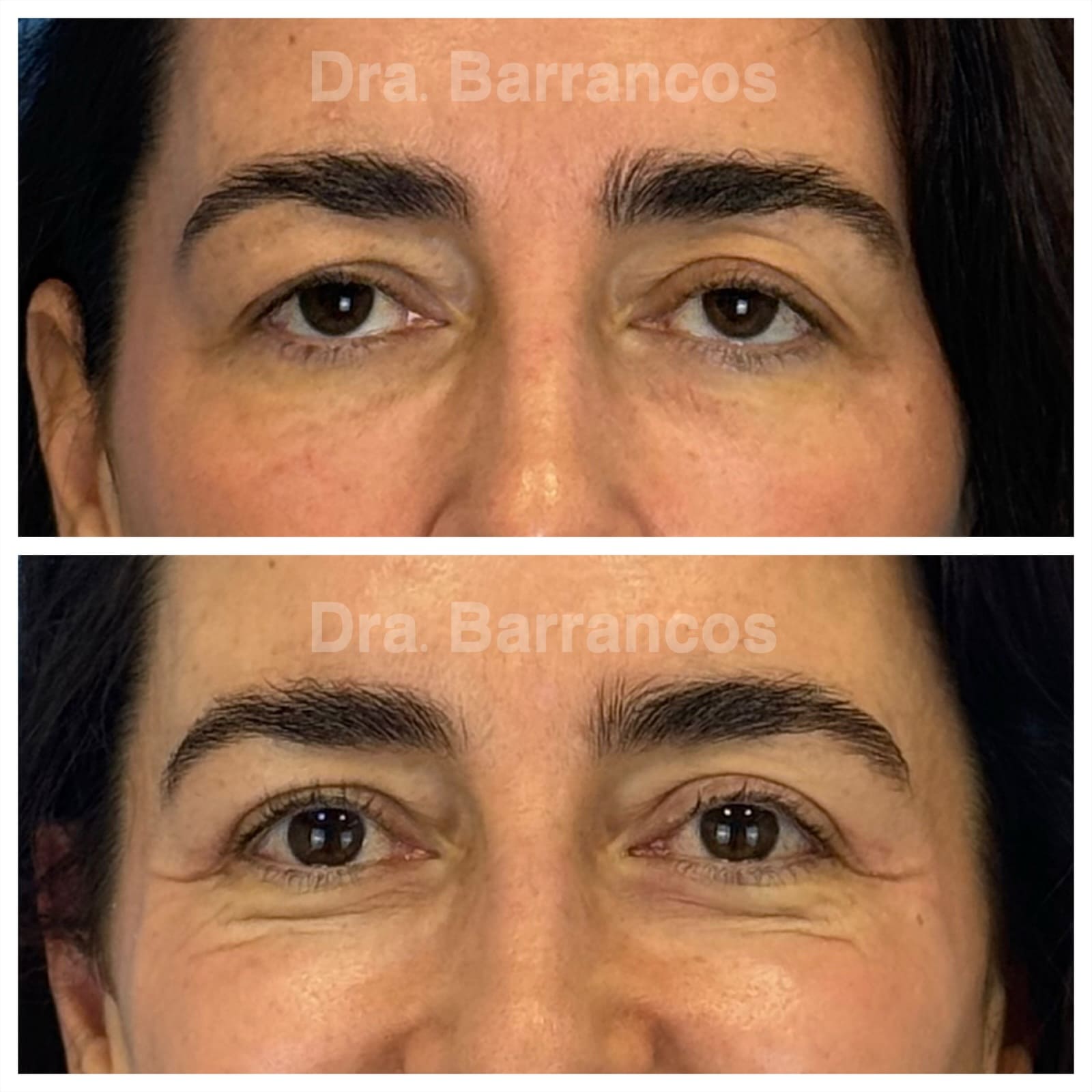
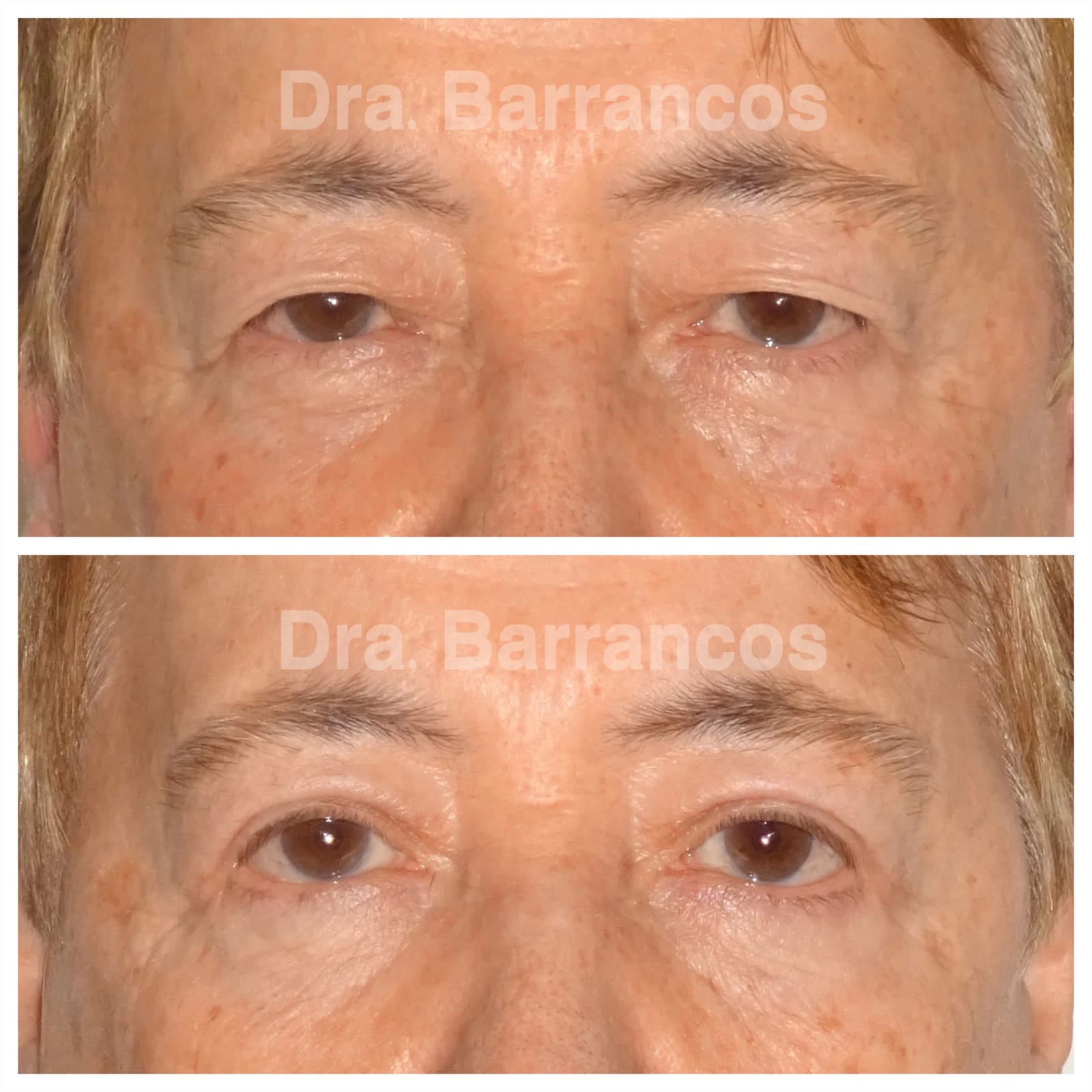
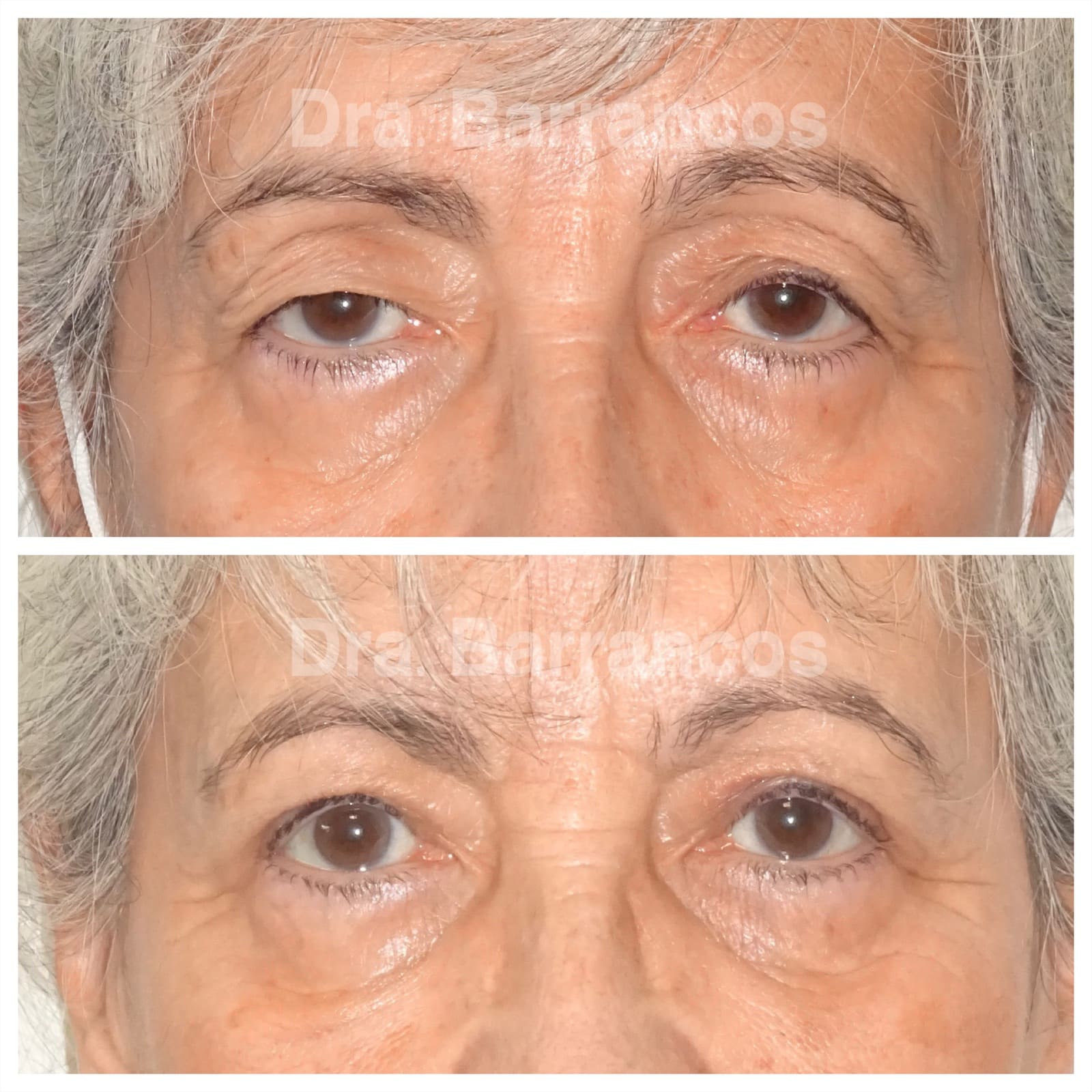
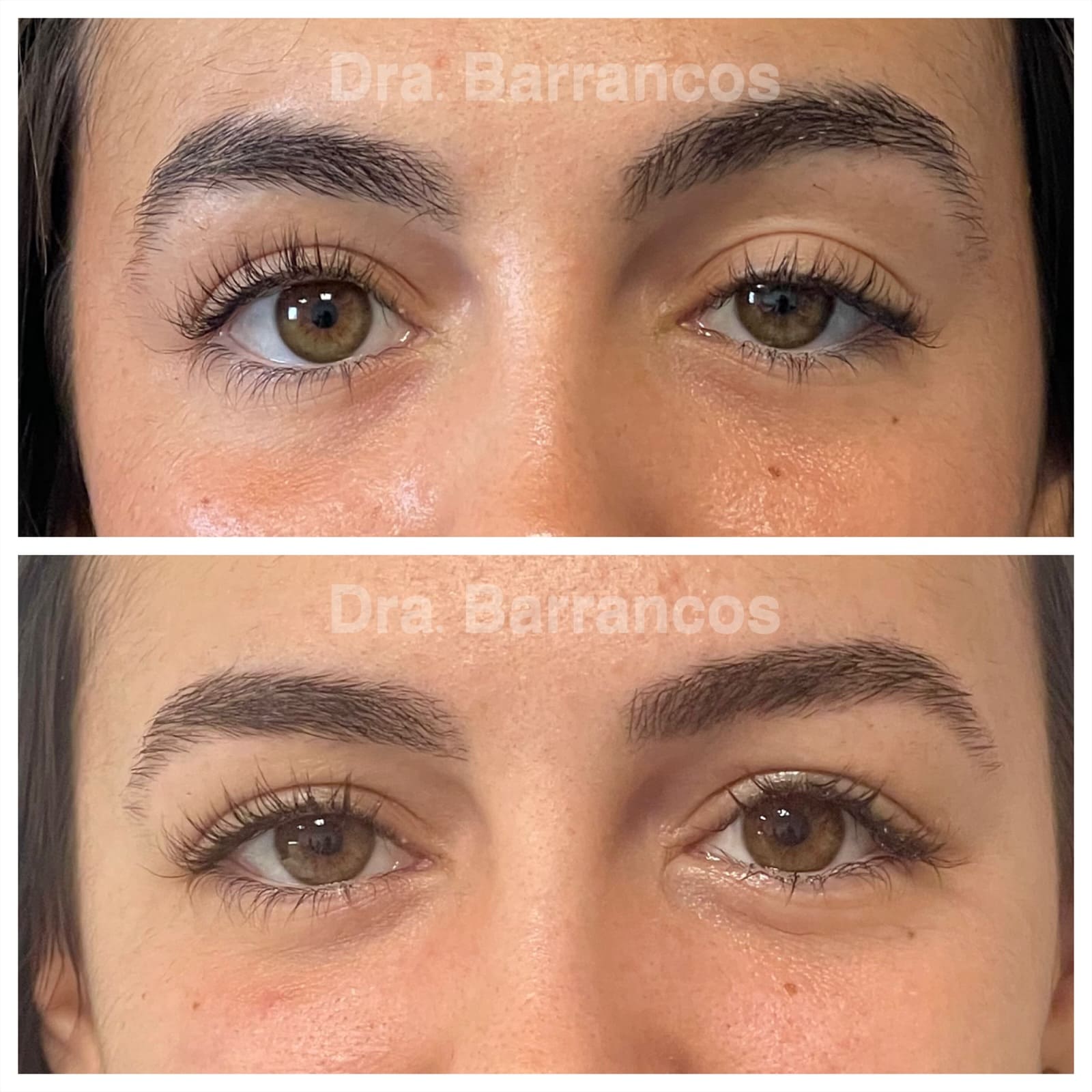
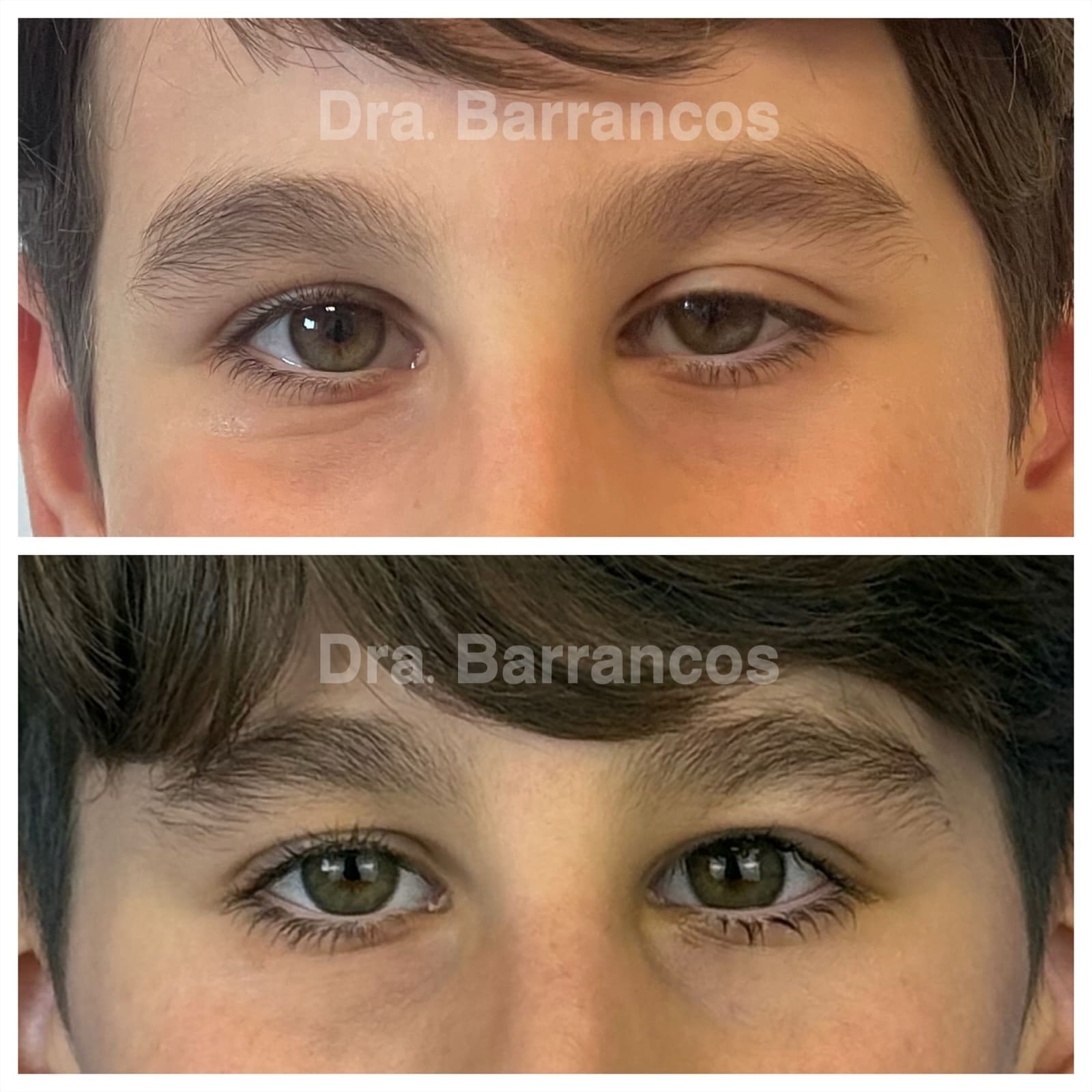
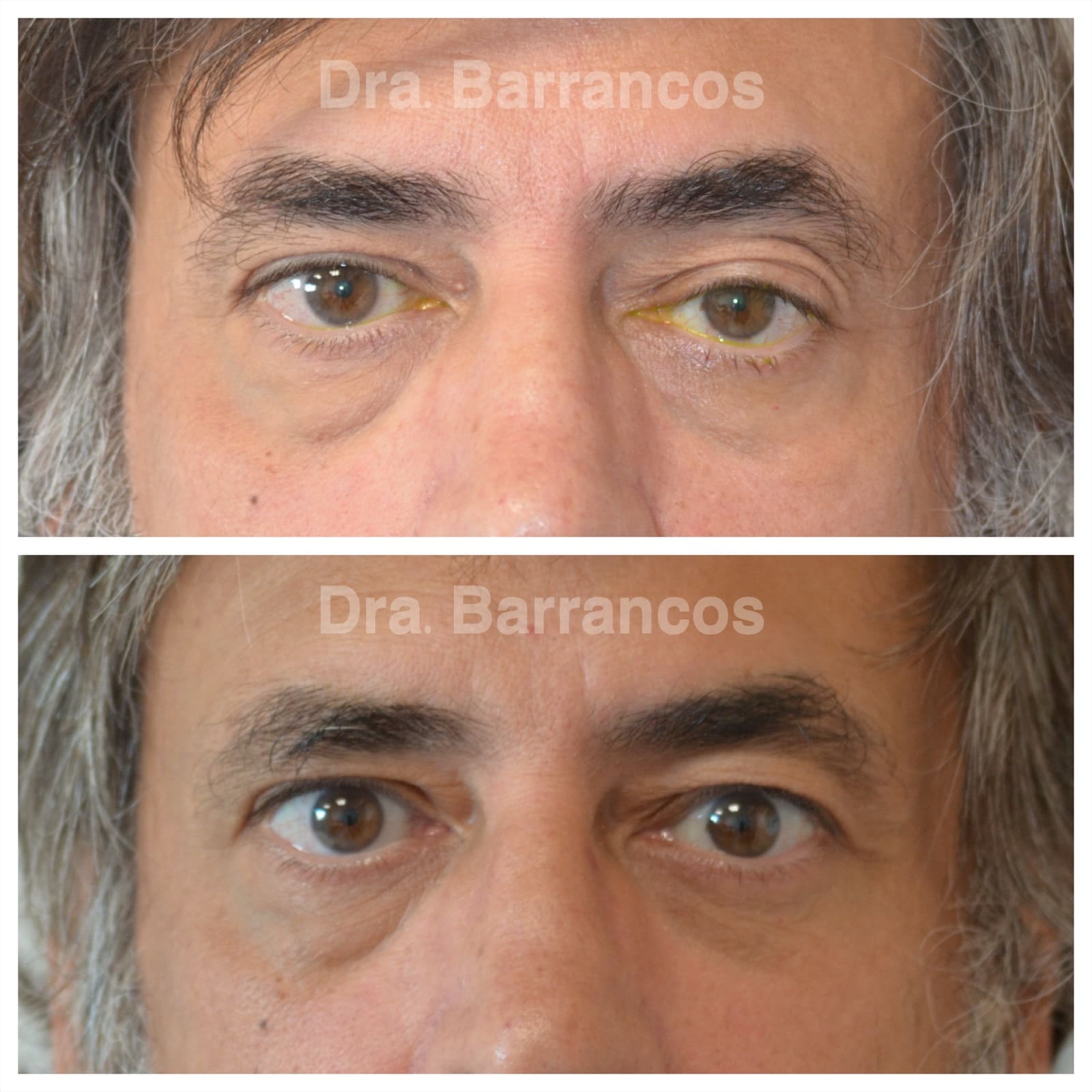
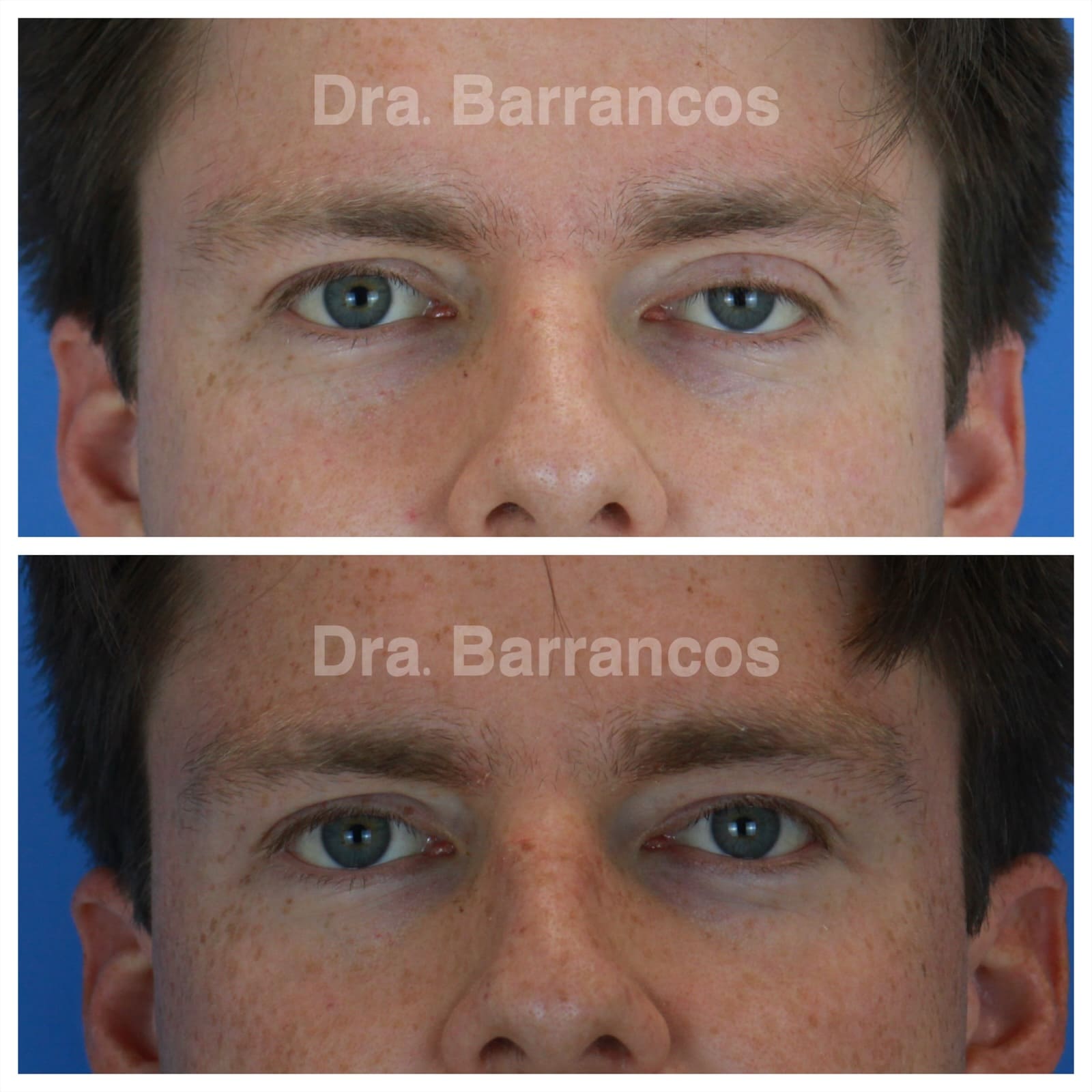
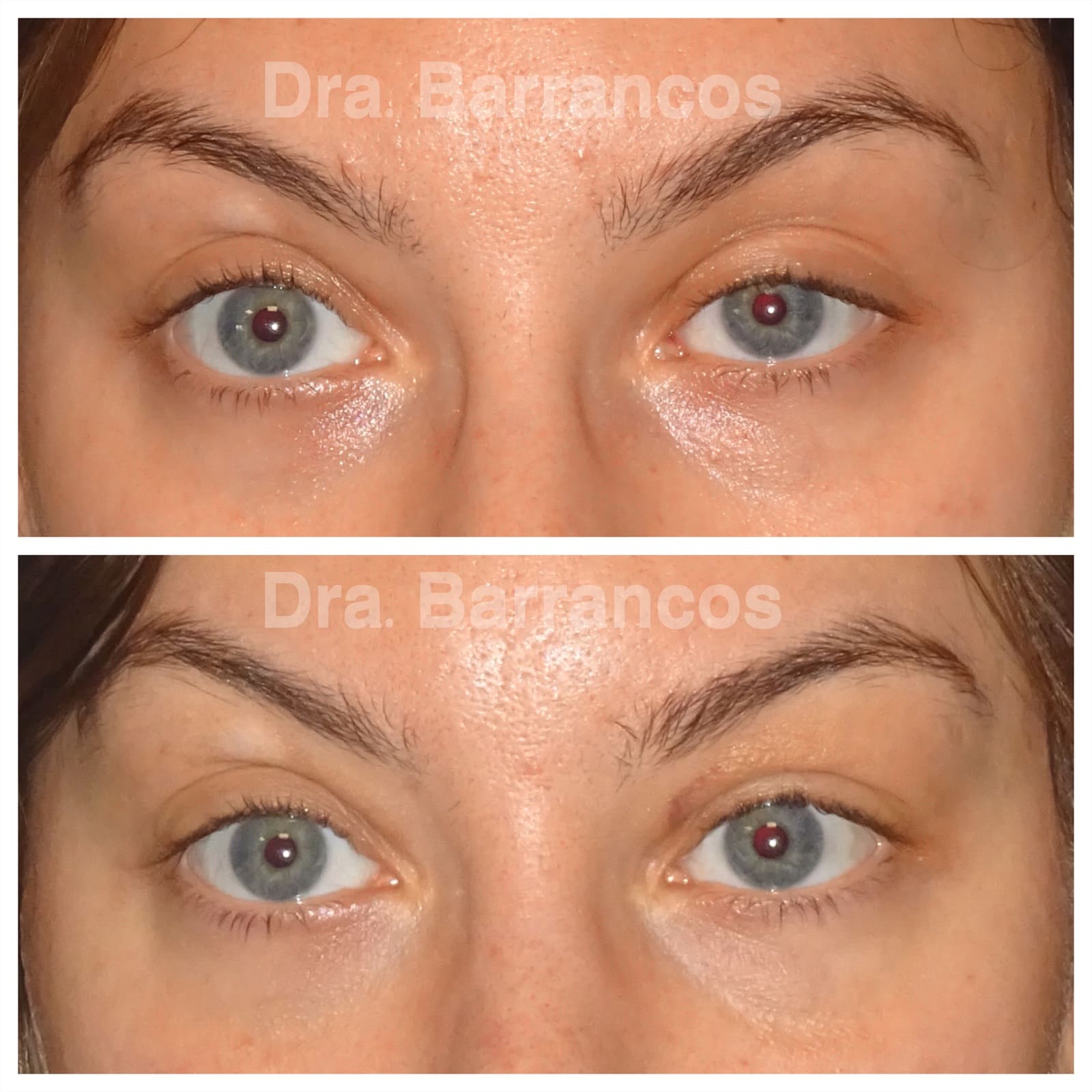
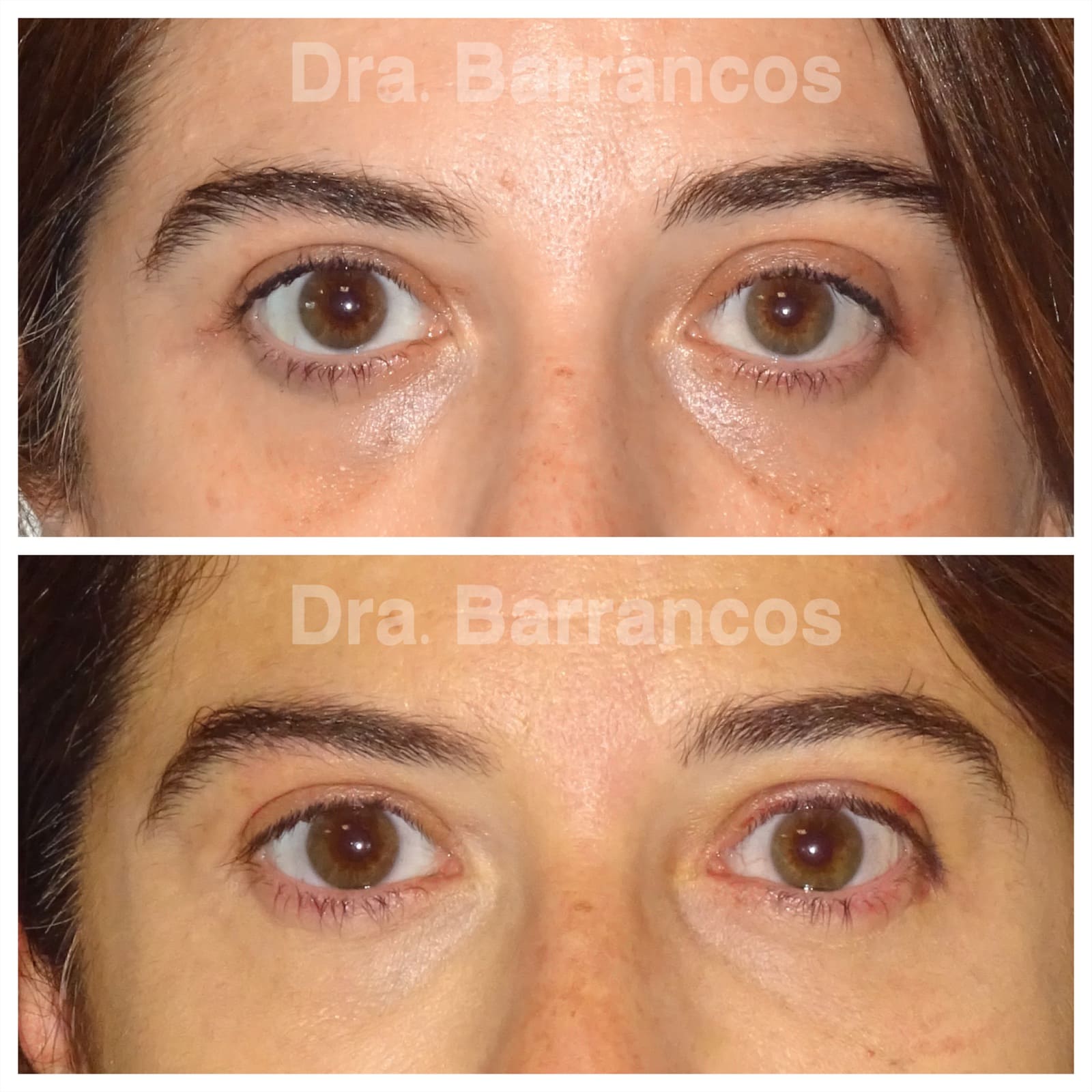
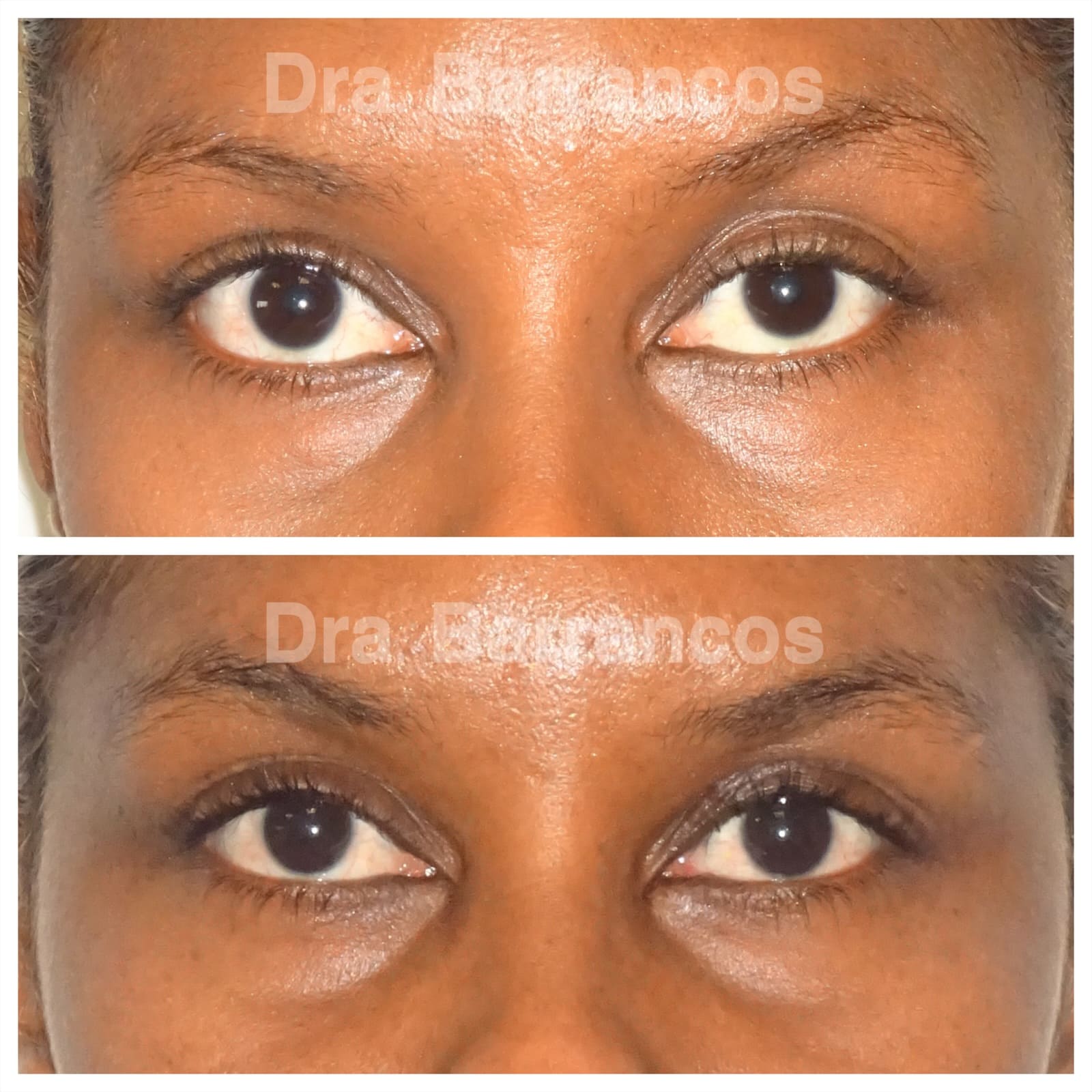
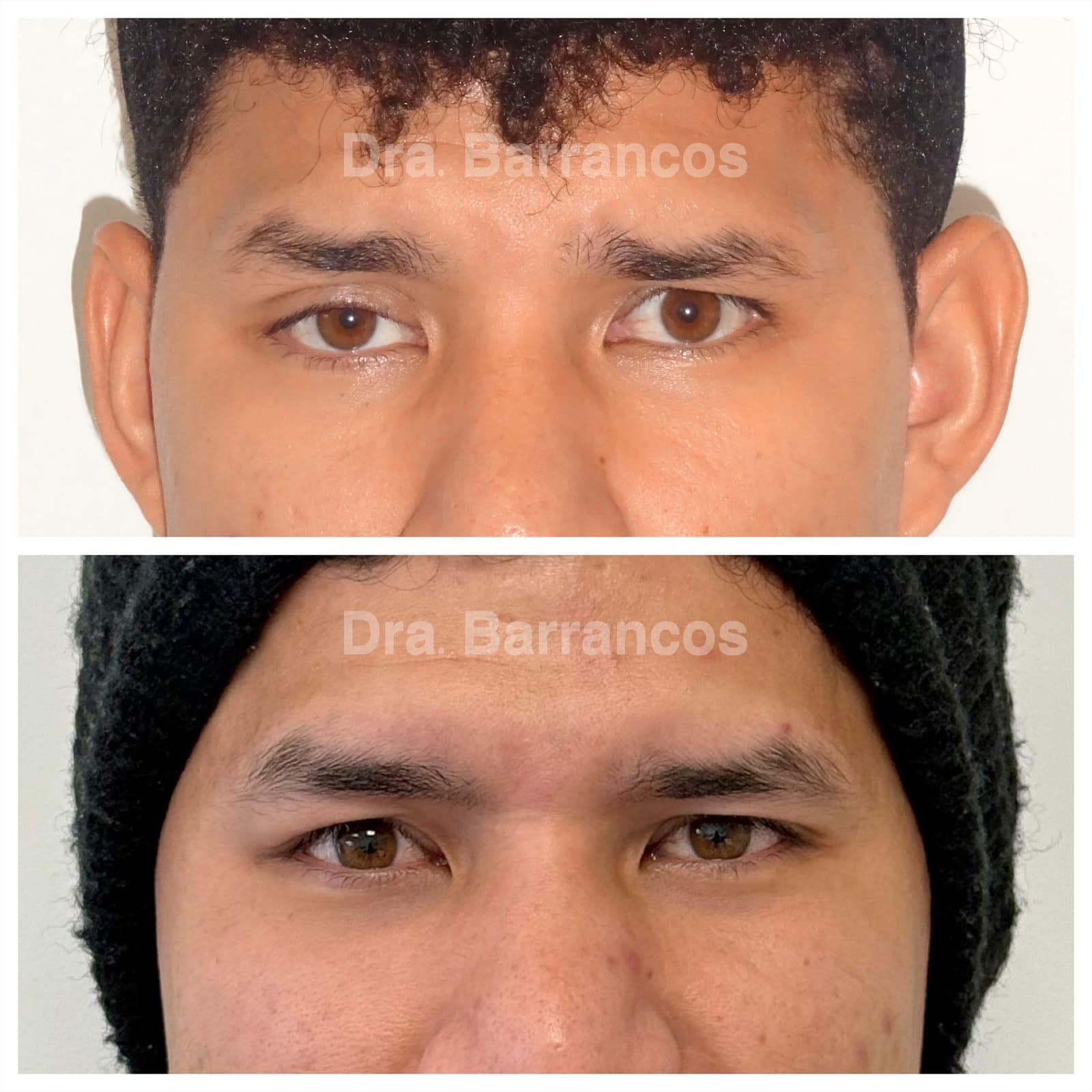
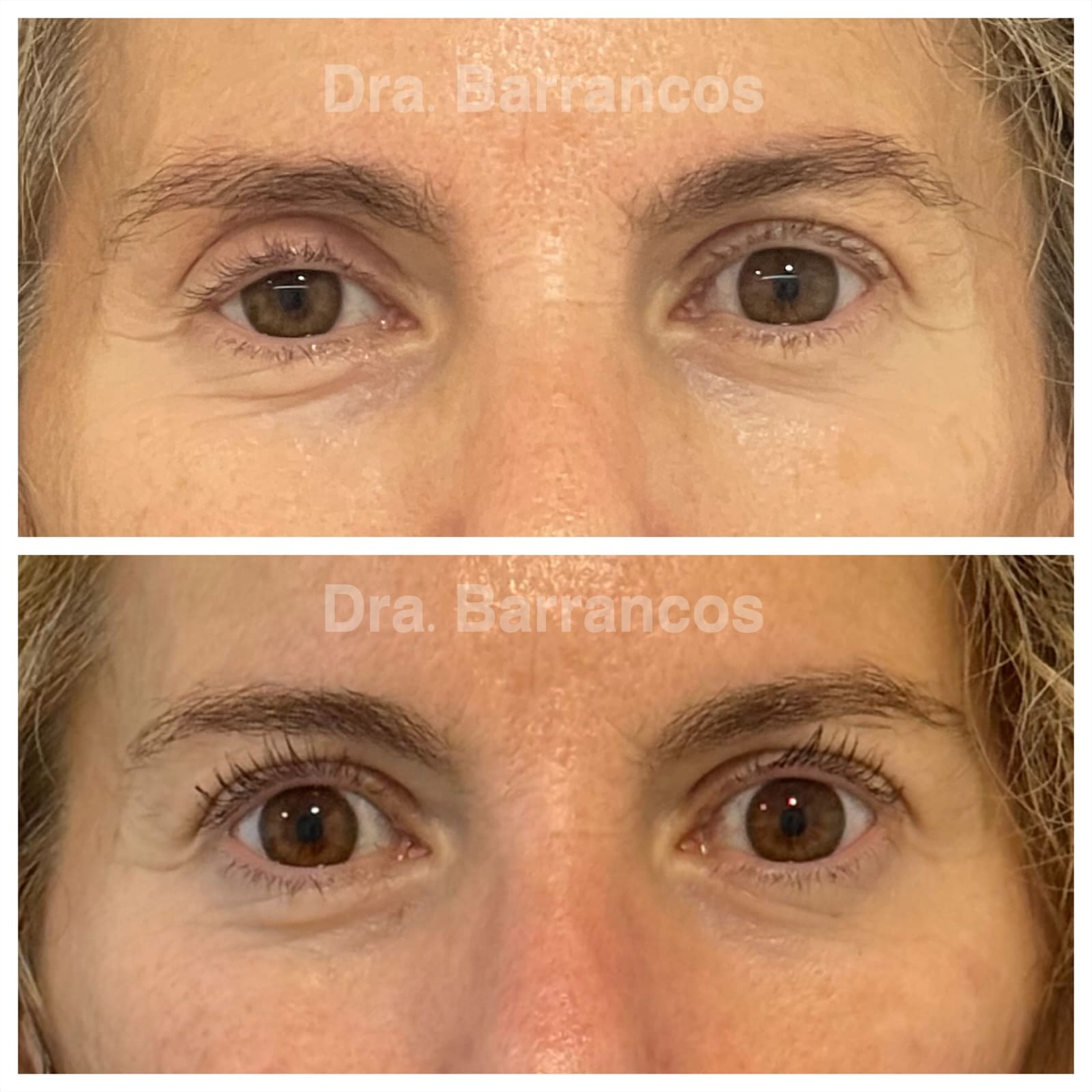
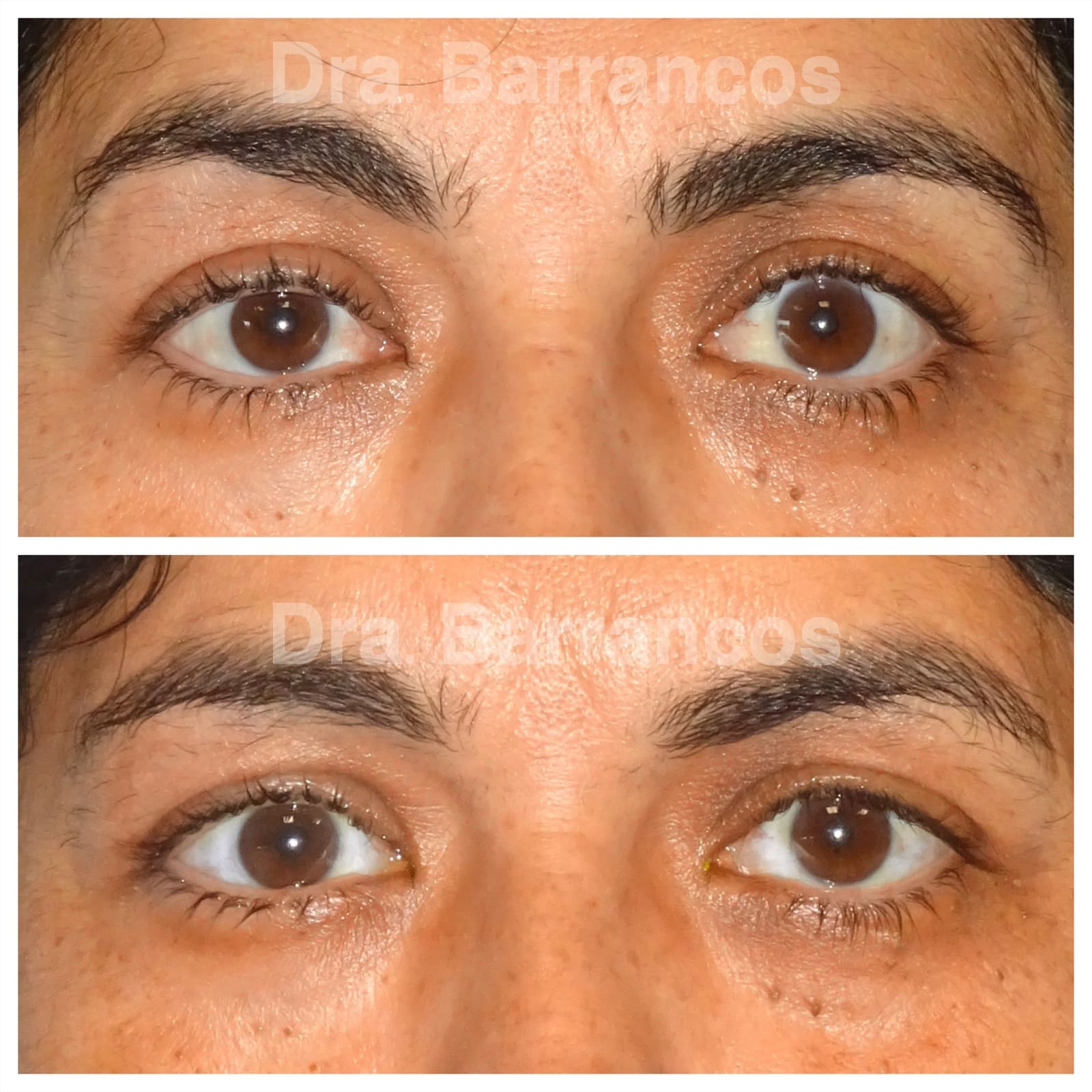
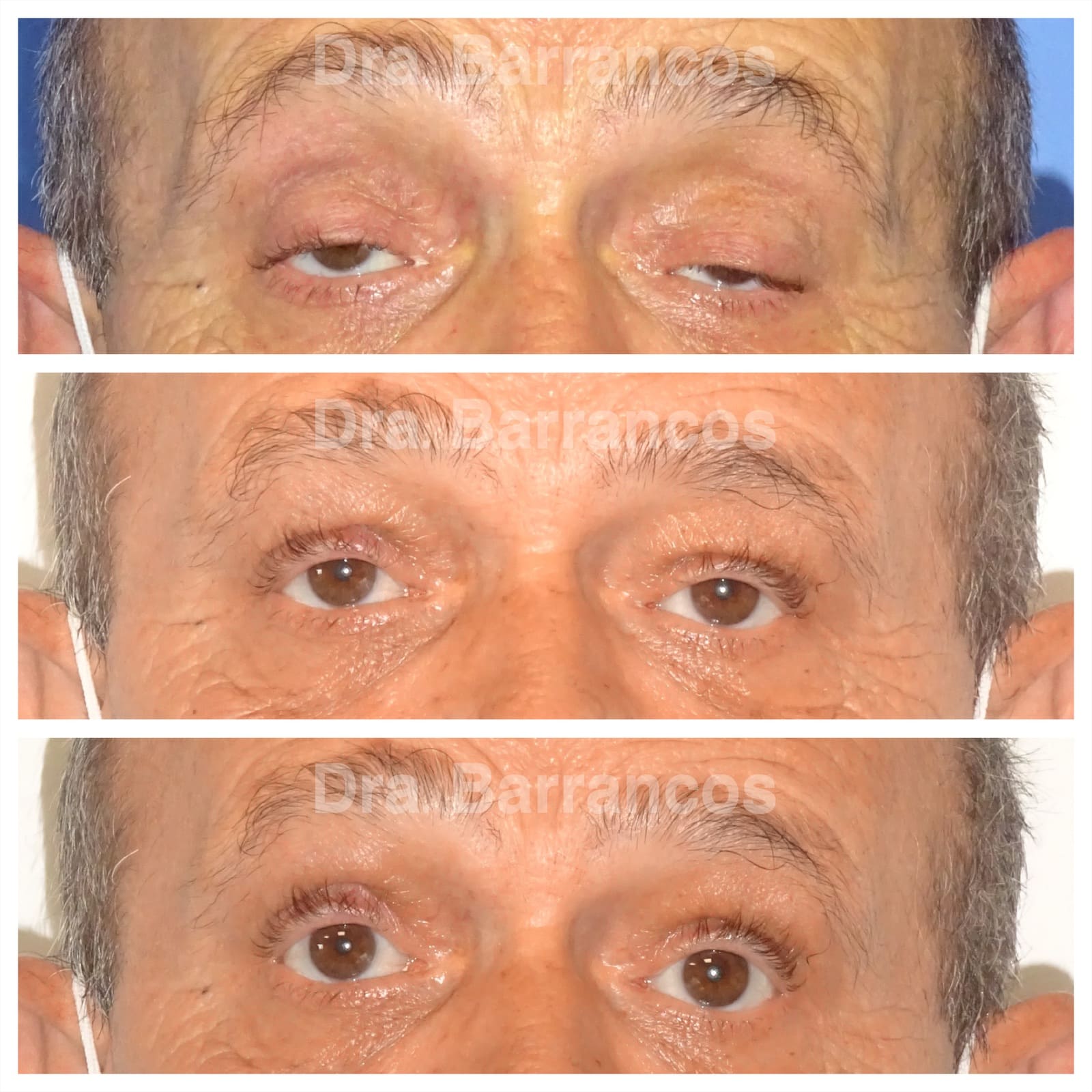
Eyelid surgery involves repositioning the eyelid into the correct position to protect the eyeball and achieve eyelid symmetry.
THERE ARE DIFFERENT TYPES
DROOPING EYELIDS
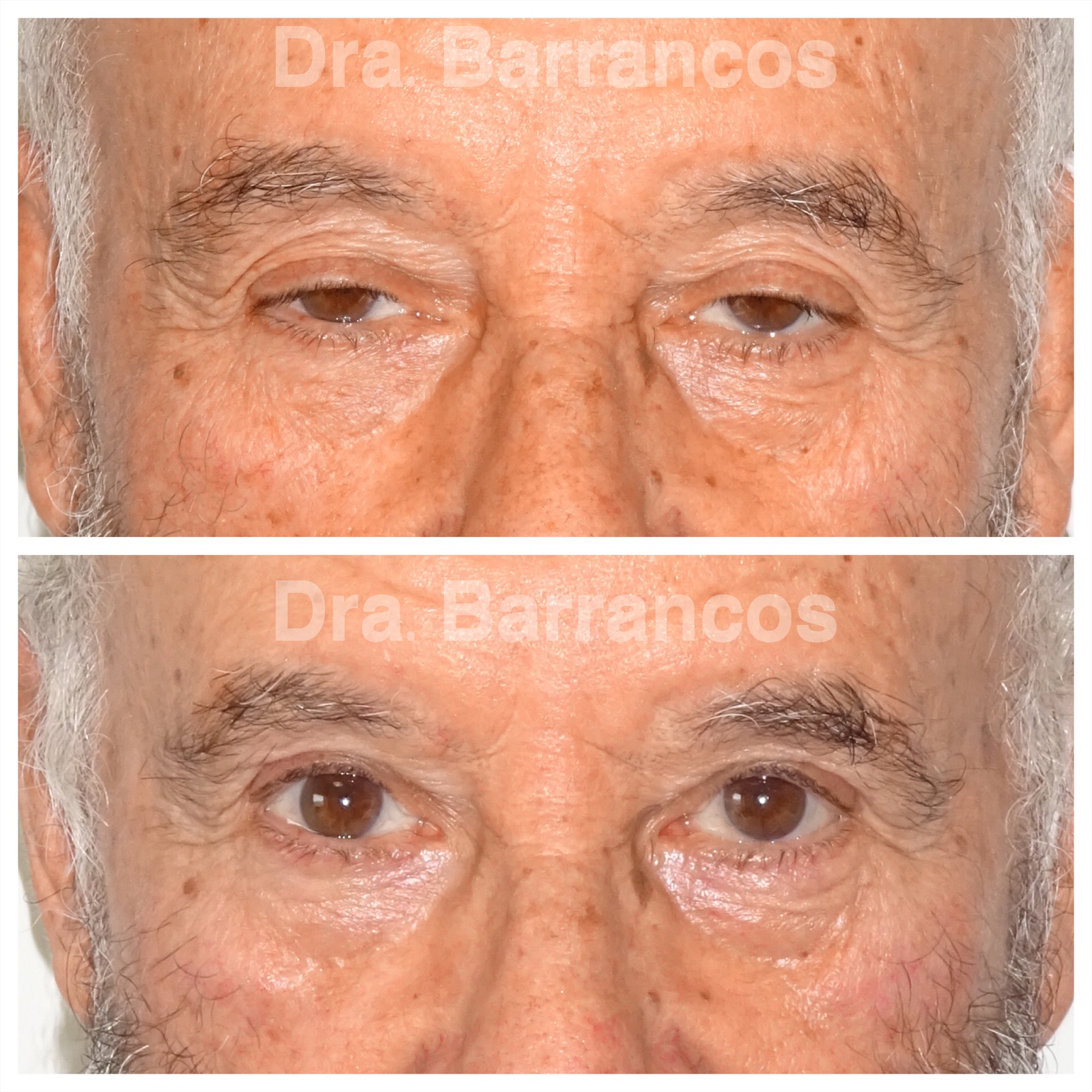
EYELID PTOSIS
In addition to excess skin, eyelids may droop because the muscle that lifts the eyelids has become detached (aponeurotic ptosis) or because it is a weak muscle (myogenic ptosis). Although there are different techniques to correct drooping eyelids, the two most commonly used are reinsertion of the levator muscle and conjunctivomullerectomy.
Upper blepharoplasty and correction of eyelid ptosis
Upper blepharoplasty and correction of eyelid ptosis
Upper blepharoplasty and correction of eyelid ptosis
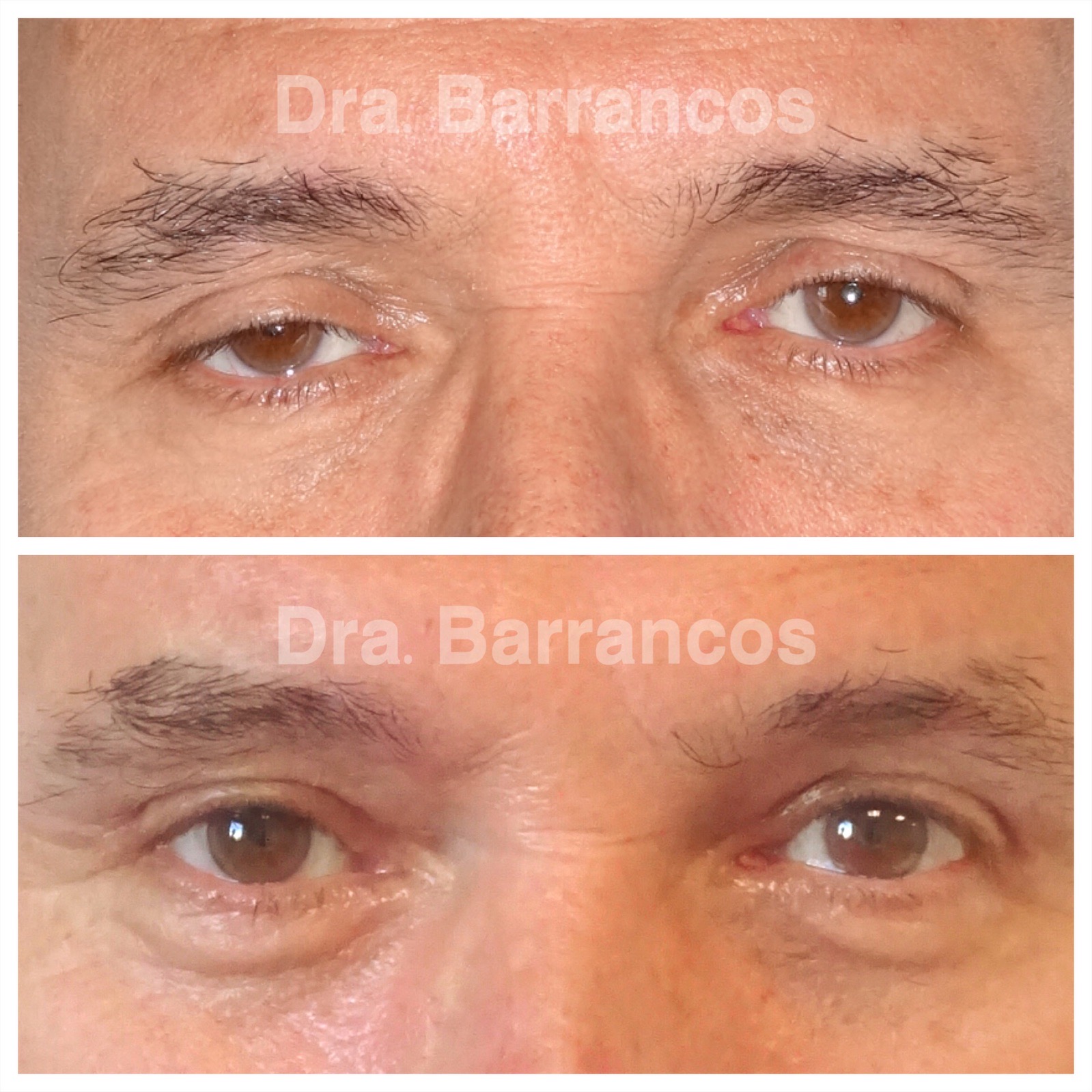
Correction of eyelid ptosis
Correction of eyelid ptosis
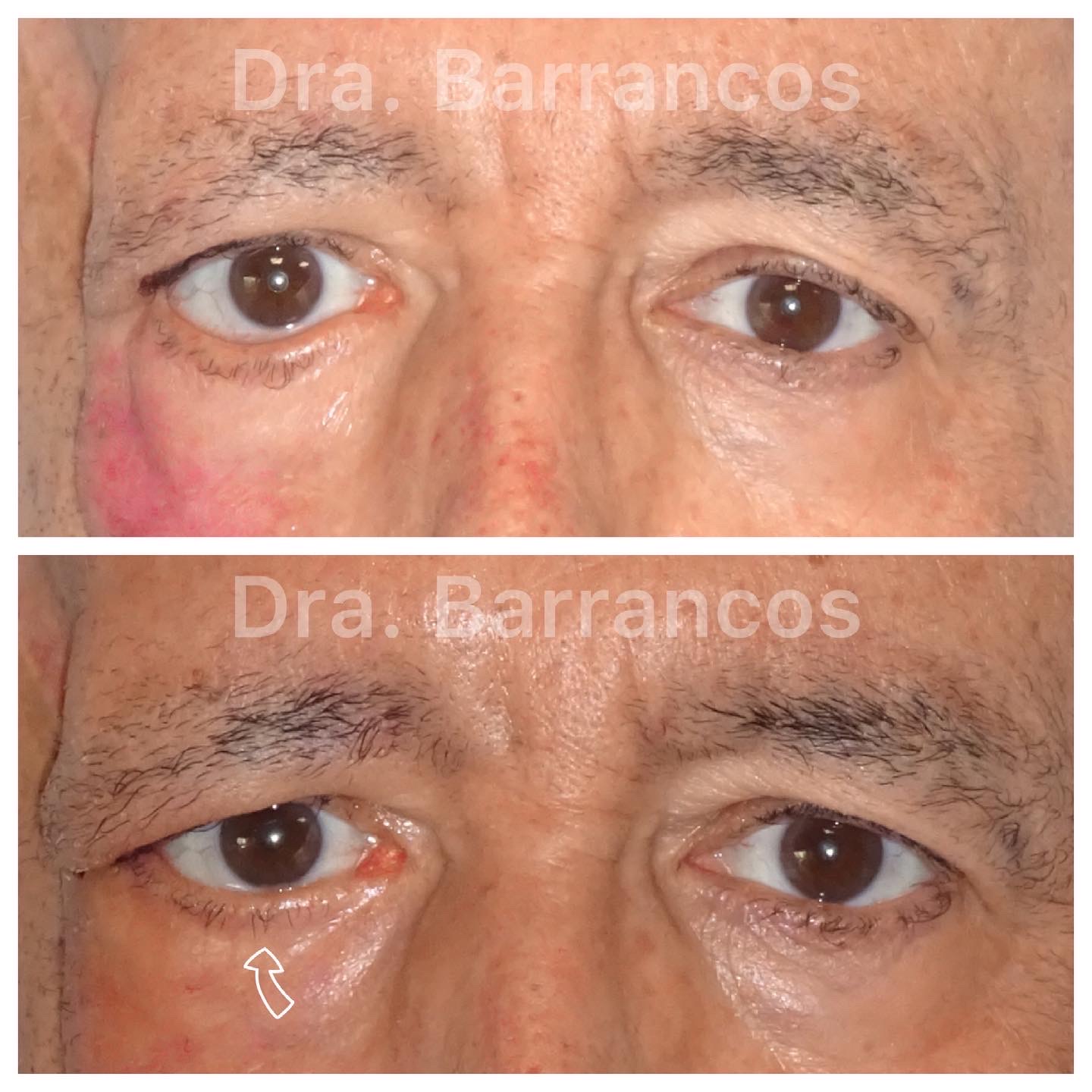
Correction of ectropion
Direct brow lift and correction of eyelid retraction with auricular cartilage graft
Direct brow lift and correction of eyelid retraction with auricular cartilage graft
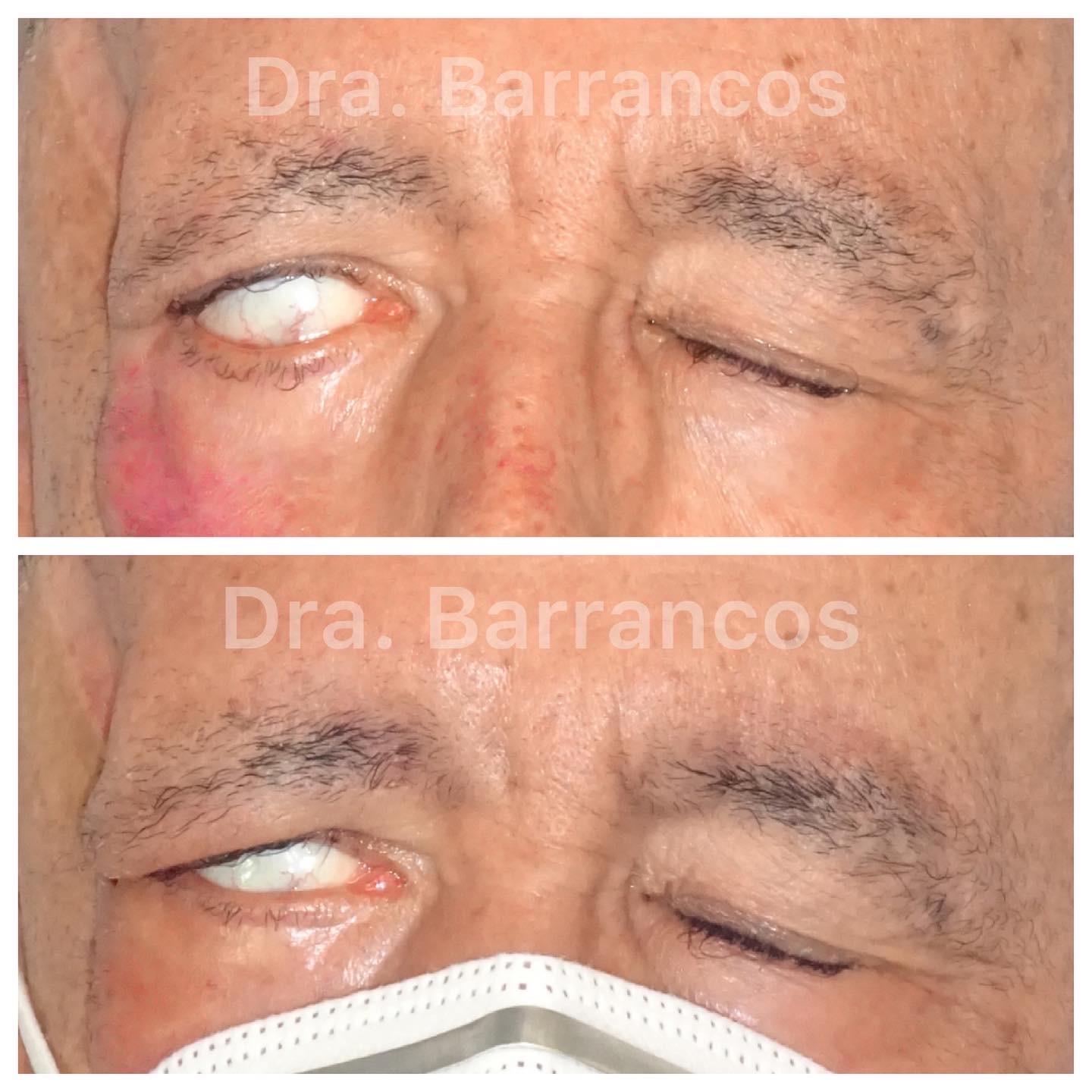
Correction of eyelid retraction in facial paralysis
Correction of eyelid retraction in facial paralysis
Direct brow lift and correction of eyelid ptosis
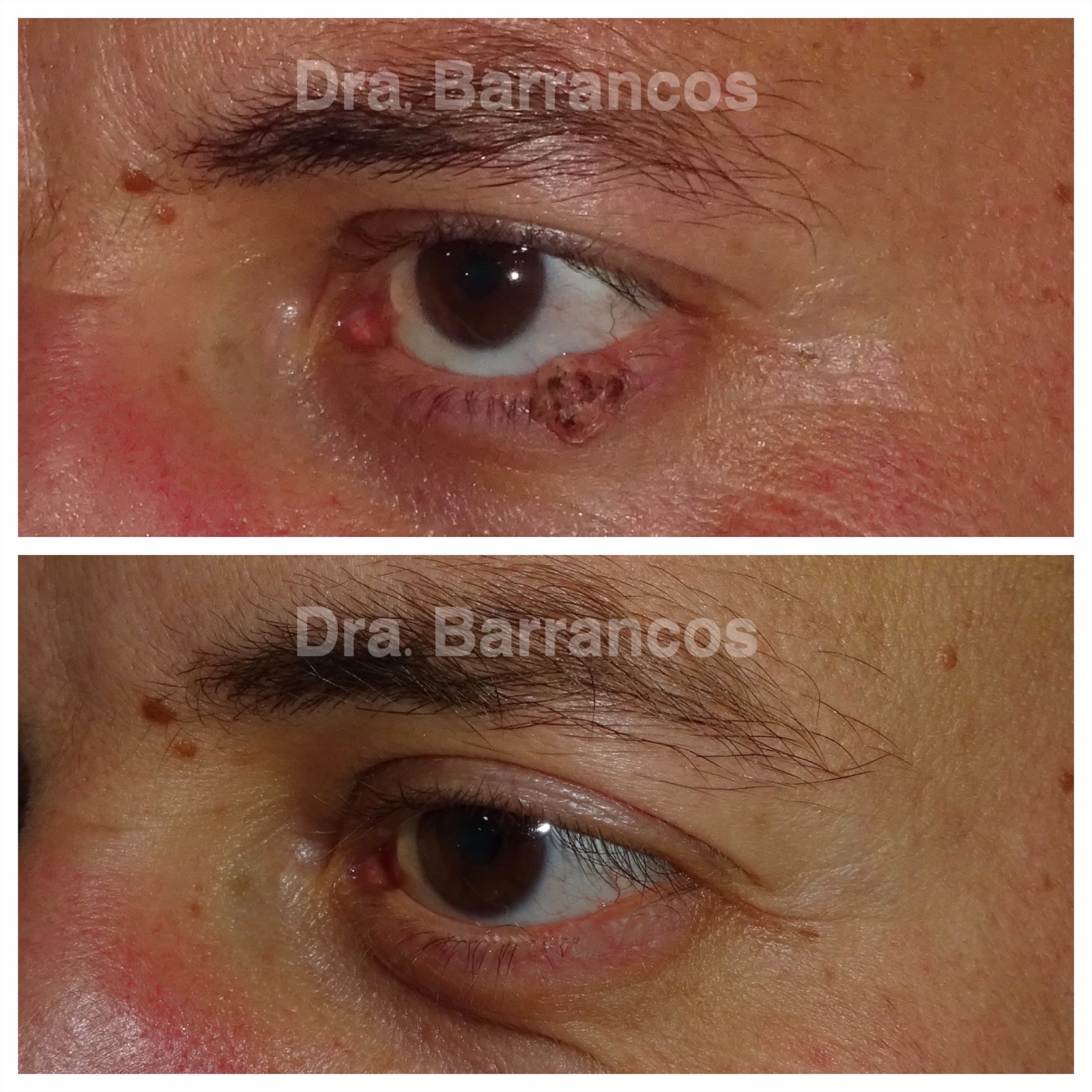
Excision of a benign mass
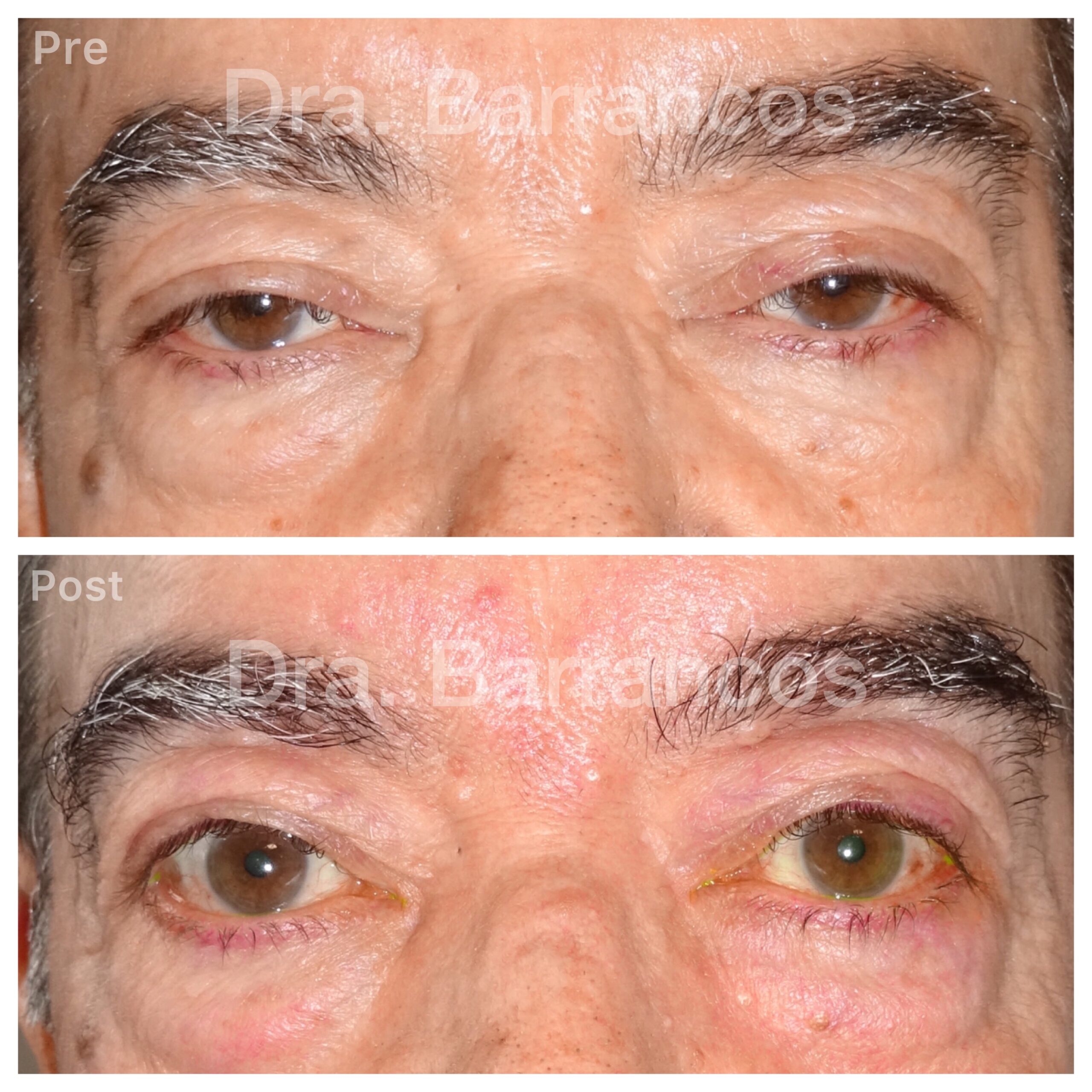
Ptosis and upper blepharoplasty
Ptosis and upper blepharoplasty
Ptosis and upper blepharoplasty
Ptosis and upper blepharoplasty
Ptosis and upper blepharoplasty
Ptosis and upper blepharoplasty
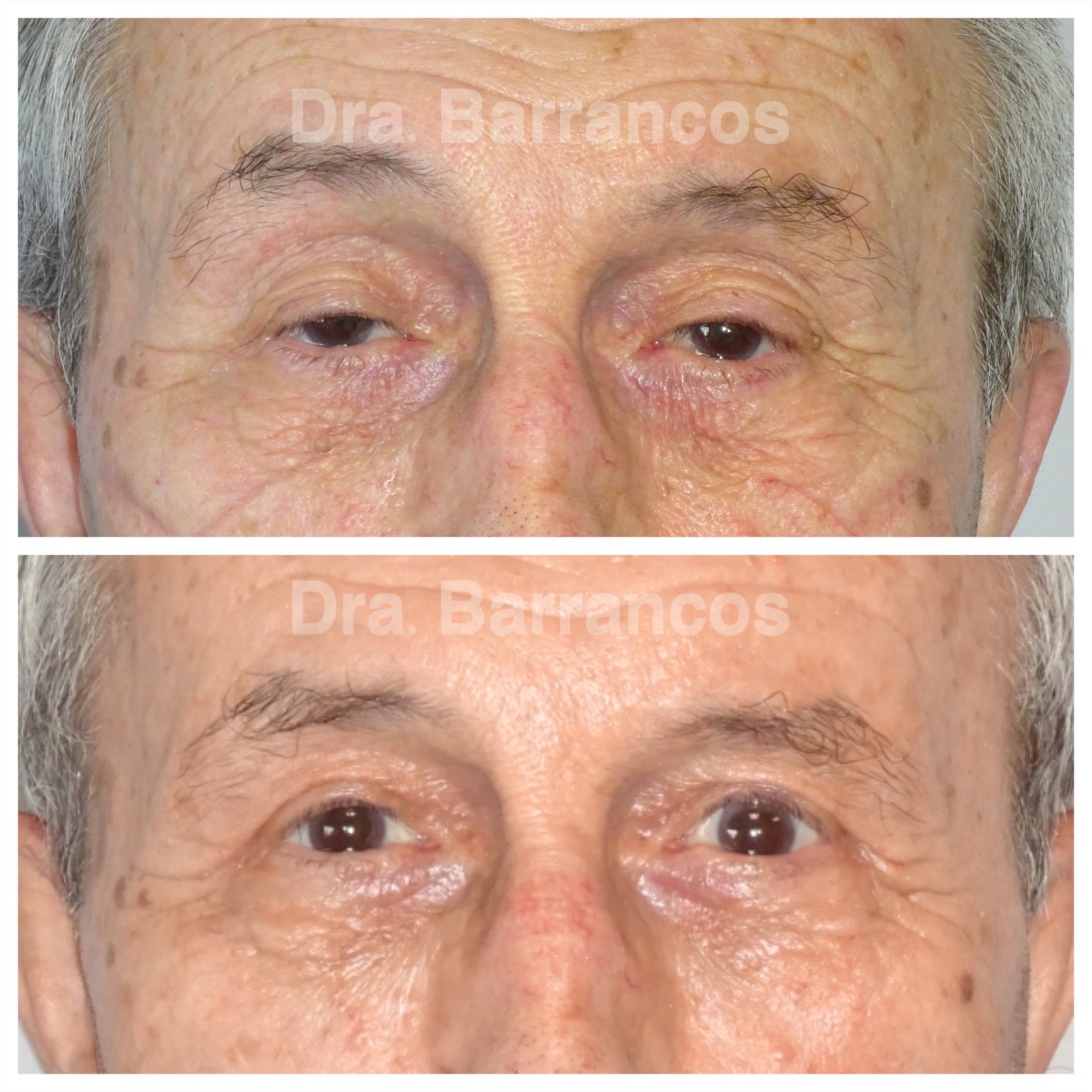
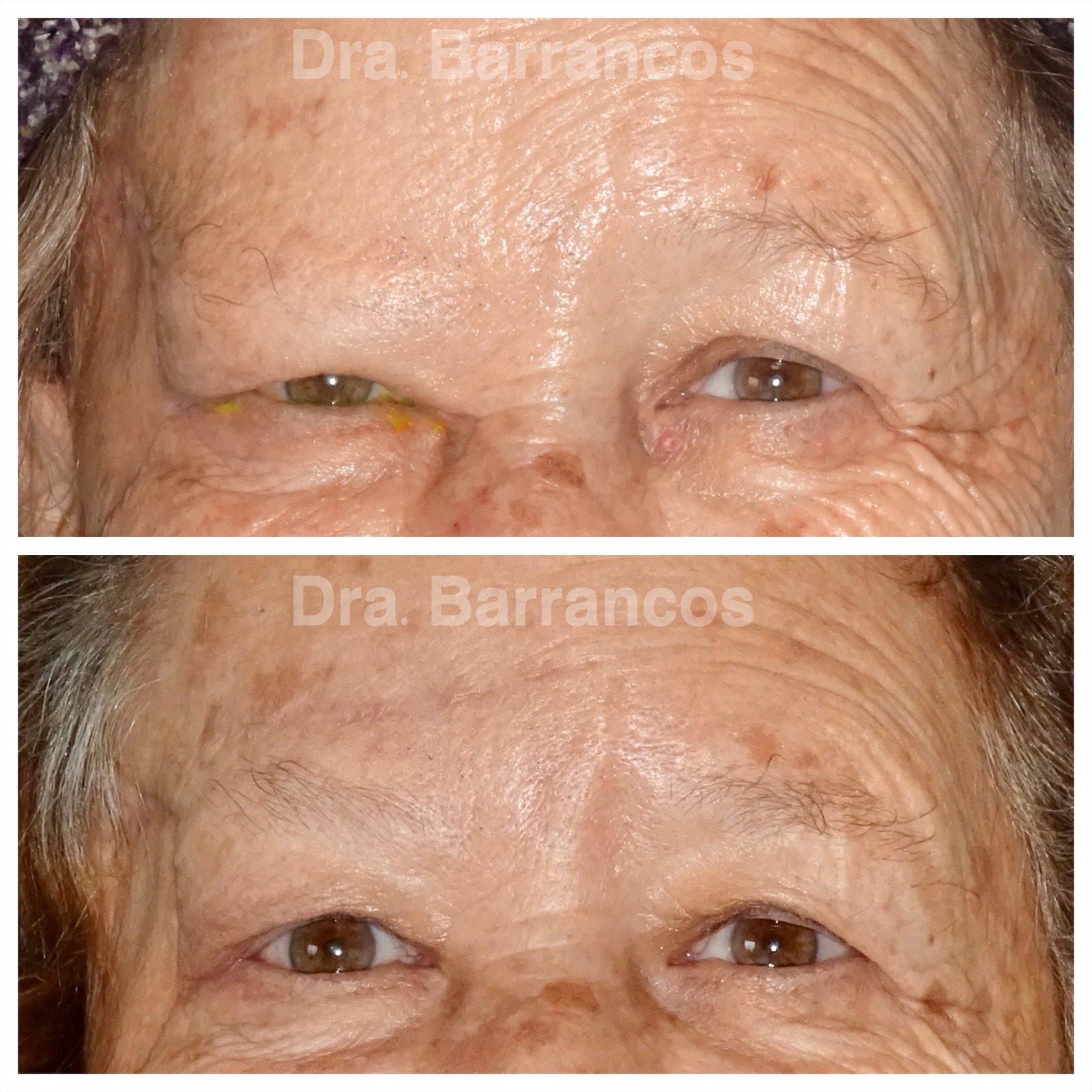
Eyelid ptosis
Eyelid ptosis
Eyelid ptosis
Eyelid ptosis
Eyelid ptosis
Eyelid ptosis
Eyelid ptosis
Eyelid ptosis
Eyelid ptosis
Eyelid ptosis
If you would like to see more results and videos of the process, follow me on Instagram
TESTIMONIALS
Dr Barrancos was very kind and attentive with me. She explained my condition and the treatment in detail during the consultation. She also contacted me a few days later to check on my progress.
Victoria M.
Dr Barrancos performed my blepharoplasty last year. The result was a success: my eyes look more open and I look much more rejuvenated. She is an excellent professional and a wonderful person. Thank you, Doctor.
Blanca FL
Dr Barrancos provided an excellent aesthetic treatment. She understood my needs and offered the best solution. Communication and care were second to none. I am very satisfied with the result. A great professional.
María D.S.
Excellent professional, wonderful care, and she knows how to advise you according to your needs.
100% recommended
IFN
Very professional and pleasant, very attentive to ensuring we understood the situation and the solutions. She provided an effective treatment and resolved the problem. 100% recommended
María G.A
Dr Barrancos performed my blepharoplasty last year. The result was a success: my eyes look more open and I look much more rejuvenated. She is an excellent professional and a wonderful person. Thank you, Doctor.
Blanca FL
The doctor explained the causes and different treatments for my problem in great detail. The care was excellent and very personable, with genuine interest in my progress. A very good professional. Thank you.
You should avoid, unless absolutely necessary, taking anti-inflammatory medicines such as aspirin, ibuprofen, etc. for one week before surgery, as they prolong bleeding time.
If you take antiplatelet or anticoagulant medication (Plavix, Adiro, Iscover, Sintrom, Heparin, etc.), you should inform your surgeon and anaesthetist so that the regimen can be adjusted.
You will attend the operating theatre after fasting for 8 hours, without makeup, and avoiding jewellery and Lycra garments.
Bed rest is not necessary, but relative rest at home is recommended for the first 24–48 hours.
You may apply ice chips protected with a cloth or gauze to the eyelids, trying to press on the bone, not on the eye. Periods of 15–20 minutes several times a day are recommended.
The resulting bruise will depend mainly on each patient’s individual characteristics. It is not possible to know in advance. During the first 24 hours, the gauze may become stained with blood.
You may have difficulty closing your eyelids for a few days. Therefore, the use of artificial tears (with hyaluronic acid and without preservatives) is recommended during that time. You may also notice difficulty opening your eyelids due to the heaviness caused by bruising and eyelid swelling.
You may experience minor changes in vision, with a sensation of blurred vision and glare. You may also have tearing and a gritty sensation. These effects are temporary.
You should avoid alcohol intake during the first 24–48 hours.
You should avoid physical exercise during the first week.
You should avoid makeup during the first two weeks.
If you work from home, you may do so after 24–48 hours, avoiding exertion.
Around days 7–10, you can usually return to work with very few visible signs.
The stitches are removed approximately one week later. Small white spots may appear in the suture area. The final scar is usually a whitish line. Avoid sun exposure and apply sunscreen.
It is important to avoid sun exposure on the scar. While you still have stitches, you can protect yourself with sunglasses. Once the stitches are removed, you should use high sun protection even on cloudy days.
Some patients experience increased tearing after surgery. This is due to ocular irritation and may improve with frequent use of artificial tears.
Contact lens use is possible 7–10 days after surgery.
The results are essentially permanent. Although the face will continue to age after surgery and changes may occur over time, the results achieved with surgery are long-lasting.
In drooping eyelid surgery, the incision is made in the eyelid crease (so it is virtually invisible) or on the inside of the eyelid (with no skin scars).
In eyelid malposition surgery, the incisions are strategically placed to be minimally visible.