

LACRIMAL PATHWAY SURGERY
Tearing or epiphora occurs when excess tears overflow the ocular surface and run down the cheek. In addition to being an uncomfortable problem for the patient, it can affect vision and hinder common activities such as reading and driving. It can also cause chronic irritation of the eyelid skin.
DIFFERENT TYPES EXIST
EXTERNAL DACRYOCYSTORHINOSTOMY
Through a small incision in the skin on the side of the nose, a new connection is created between the lacrimal sac and the nose.
- ANESTHESIA: local plus sedation
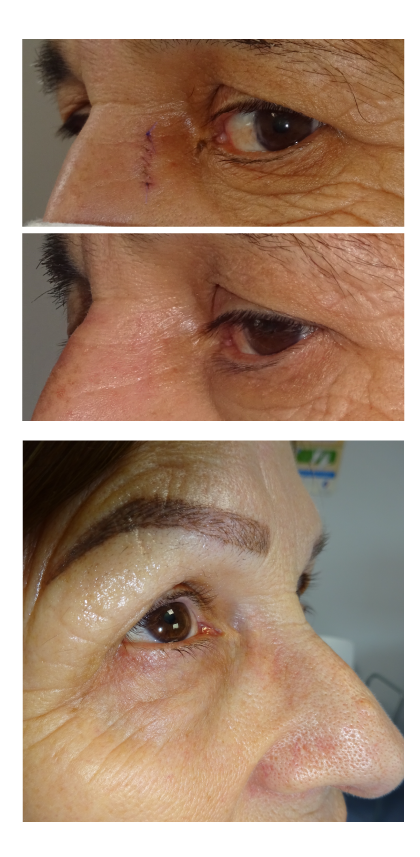
- SCAR: A small incision is made on the side of the nasal root. The scar evolves during the first few weeks and is usually almost imperceptible after a few months.
- SURGERY DURATION: 45 minutes
While tearing is not a “serious” health problem, it can be very uncomfortable in daily life and even hinder daily activities such as reading or driving. In addition, obstruction of the lacrimal pathway can facilitate the accumulation of secretions and mucus in the lacrimal sac. This promotes bacterial overgrowth, leading to recurrent conjunctivitis or acute or chronic infection of the lacrimal sac (dacryocystitis).
The operation is performed with local anesthesia and sedation, so it is not painful and avoids general anesthesia, which requires a longer recovery time.
- Bed rest is not necessary, but relative rest at home is recommended for the first 24-48 hours.
- It is common for the corresponding eye to be occluded for a period not exceeding 12-24 hours. Upon uncovering, a swollen eyelid, a hematoma of variable size, and often bloody tears will be observed. From this moment, the local treatment recommended by the surgeon will begin.
- The resulting hematoma will depend mainly on the individual characteristics of each patient. It is not possible to know this beforehand.
- Slight nasal bleeding is normal for the first few days. Only significant nasal hemorrhage should be monitored, as in such circumstances, your surgeon should be contacted for evaluation and possible packing.
- You may experience minor changes in vision, with a sensation of blurred vision and glare. You may also experience tearing and a gritty sensation. These are temporary effects.
- Alcohol intake should be avoided during the first 24-48 hours.
- Physical exercise should be avoided during the first week.
- Makeup should be avoided for the first two weeks.
- If you work from home, you can do so after 24-48 hours, avoiding strenuous activities.
- Around 7-10 days, you can usually return to your job with very few visible signs.
- Stitches are removed approximately one week later. Small white dots may appear in the suture area, which are easily removed. Sun exposure should be avoided, and sunscreen should be applied.
- It is important to avoid sun exposure on the scar. While you have stitches, you can protect yourself with sunglasses. Once the stitches are removed, you should use high sun protection even on cloudy days.
- Contact lens use is possible 7-10 days after surgery.
- In some cases, a silicone tube is placed in the lacrimal duct and removed after 1-3 months. This tube is removed in the clinic. This procedure is not painful. Occasionally, tear drainage may be hindered by the presence of the tube, and tearing may improve once the tube is removed.
DACRYOCYSTECTOMY
(LACRIMAL SAC EXCISION)
Occasionally, the main symptom of lacrimal pathway obstruction is recurrent infections of the lacrimal sac. If the patient has little tearing or their pathologies contraindicate dacryocystorhinostomy, dacryocystectomy or excision of the lacrimal sac may be advised. It is a very safe surgery that prevents recurrent infections but does not reconstruct the lacrimal pathway.
- ANESTHESIA: local plus sedation
- SCAR: A small incision is made on the side of the nasal root. The scar evolves during the first few weeks and is usually almost imperceptible after a few months.
- SURGERY DURATION: 45-60 minutes

CONGENITAL OBSTRUCTION OF THE LACRIMAL PATHWAY
It is relatively common for children to be born with an imperforation of the lower lacrimal pathway, which connects the lacrimal duct to the nasal cavity. These children present with tearing, increased secretions, and recurrent conjunctivitis. Fortunately, in approximately 90% of children, this problem resolves on its own during the first year of life. Massages over the lacrimal sac help resolve the obstruction. If symptoms persist after the first year, evaluation by an ophthalmologist specializing in the lacrimal pathway is important to assess treatment for this obstruction.
If lower lacrimal pathway obstruction is observed in young children that has not resolved during the first year of life, probing under sedation is usually recommended. It is a simple procedure that helps open the connection of the lacrimal pathway to the nasal cavity, resolving the obstruction.

ANESTHESIA
sedation, the patient goes home after the procedure.

SURGERY DURATION
10 minutes.

SCAR
there is no scar or external wound. It is normal for tears to be bloody or for there to be slight nasal bleeding.
RESULTS
BEFORE AND AFTER
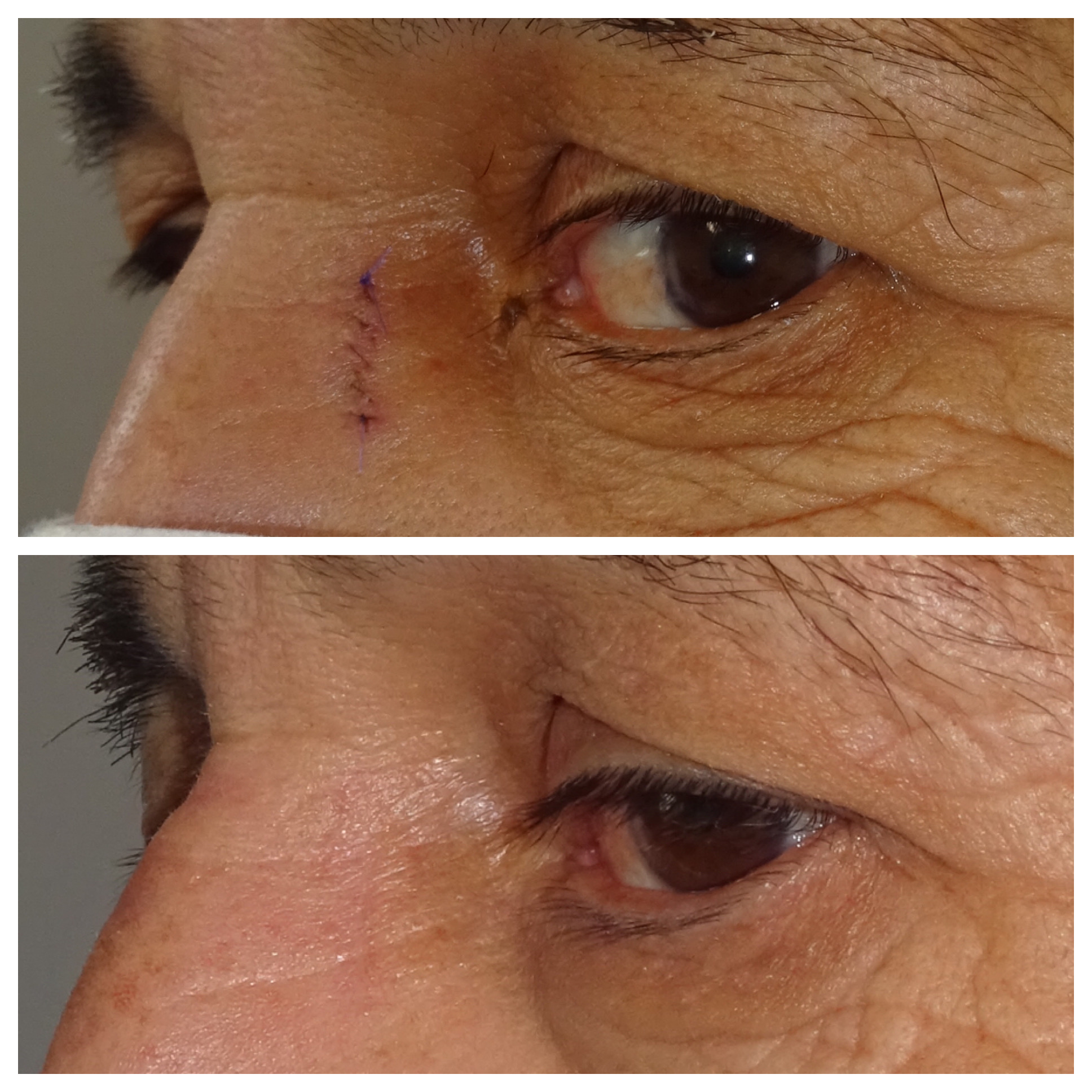
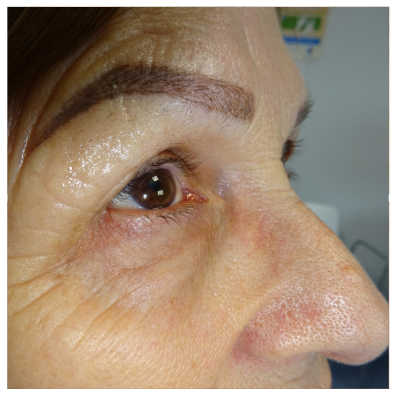
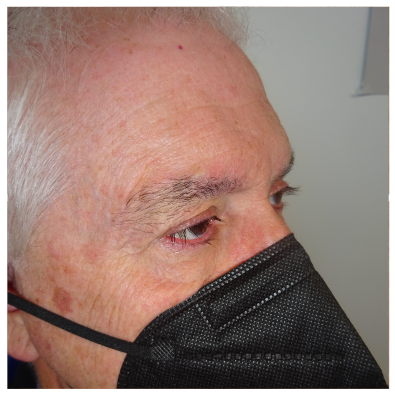
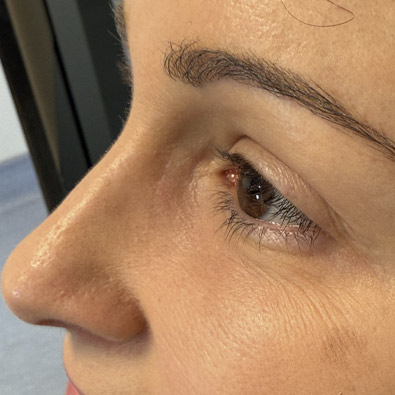
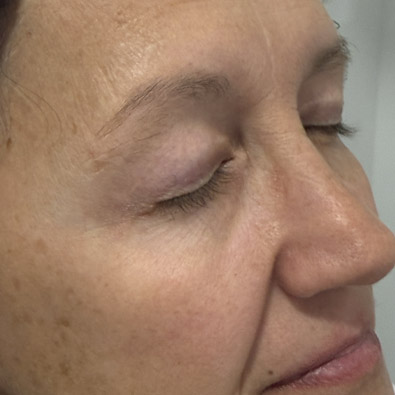
If you want to see more results and videos of the process, follow me on Instagram

TESTIMONIALS
DO YOU HAVE ANY QUESTIONS?
For dacryocystorhinostomy/dacryocystectomy:
- You should avoid, unless absolutely essential, taking anti-inflammatory drugs such as aspirin, ibuprofen, etc., for one week before surgery, as they prolong bleeding times.
- If you are taking antiplatelet or anticoagulant medications (Plavix, Adiro, Iscover, Sintrom, Heparin…), you must inform your surgeon and anesthetist to adjust the regimen or the suitability of the surgery.
- You should arrive at the operating room having fasted for 8 hours, without makeup, and avoiding jewelry and Lycra clothing.
For dacryocystorhinostomy/dacryocystectomy:
- Bed rest is not necessary, but relative rest at home is recommended for the first 48-72 hours.
- It is common for the corresponding eye to be occluded for a period not exceeding 12-24 hours. Upon uncovering, a swollen eyelid, a hematoma of variable size, and often bloody tears will be observed. From this moment, the local treatment recommended by the surgeon will begin.
- The resulting hematoma will depend mainly on the individual characteristics of each patient. It is not possible to know this beforehand.
- You may experience minor changes in vision, with a sensation of blurred vision and glare. You may also experience tearing and a gritty sensation. These are temporary effects.
- Alcohol intake should be avoided during the first 24-48 hours.
- Physical exercise should be avoided during the first week.
- Makeup should be avoided for the first two weeks.
- If you work from home, you can do so after 24-48 hours, avoiding strenuous activities.
- Around 7-10 days, you can usually return to your job with very few visible signs.
- Stitches are removed approximately one week later. Small white dots may appear in the suture area, which are easily removed. Sun exposure should be avoided, and sunscreen should be applied.
- It is important to avoid sun exposure on the scar. While you have stitches, you can protect yourself with sunglasses. Once the stitches are removed, you should use high sun protection even on cloudy days.
- Contact lens use is possible 7-10 days after surgery.
For external dacryocystorhinostomy:
- Slight nasal bleeding is normal for the first few days. Only significant nasal hemorrhage should be monitored, as in such circumstances, your surgeon should be contacted for evaluation and possible packing.
- In some cases, a silicone tube is placed in the lacrimal duct and removed after 1-3 months. This tube is removed in the clinic. This procedure is not painful. Occasionally, tear drainage may be hindered by the presence of the tube, and tearing may improve once the tube is removed.
The results are fundamentally permanent. The success rate for dacryocystorhinostomy is greater than 85-90% (absence/improvement of tearing) and for dacryocystectomy is greater than 95% (resolution of recurrent infections).
For dacryocystorhinostomy/dacryocystectomy, an incision of approximately 1 cm in length is made on the side of the nasal root. The scar evolves during the first few weeks and is usually almost imperceptible after a few months.

