
ORBITAL TUMORS
Since the orbit is a relatively small anatomical area, space-occupying lesions or masses that increase orbital volume can result in proptosis of the globe (“bulging eyes”) and can negatively affect visual function and eye muscles. Orbital swellings increase orbital volume and cause a mass effect on the rest of the structures. Even if a mass is benign, it can invade intraorbital or adjacent structures and be considered anatomically or positionally malignant.
Vision, visual field impairment, or double vision may result from the invasion or compression of intraorbital contents secondary to a solid tumor or hemorrhage. On other occasions, even if the tumor does not cause harm, a biopsy or removal may be necessary to identify the lesion.
- ANESTHESIA: General or local with sedation
- DURATION OF SURGERY: Variable depending on size, location, and type of tumor
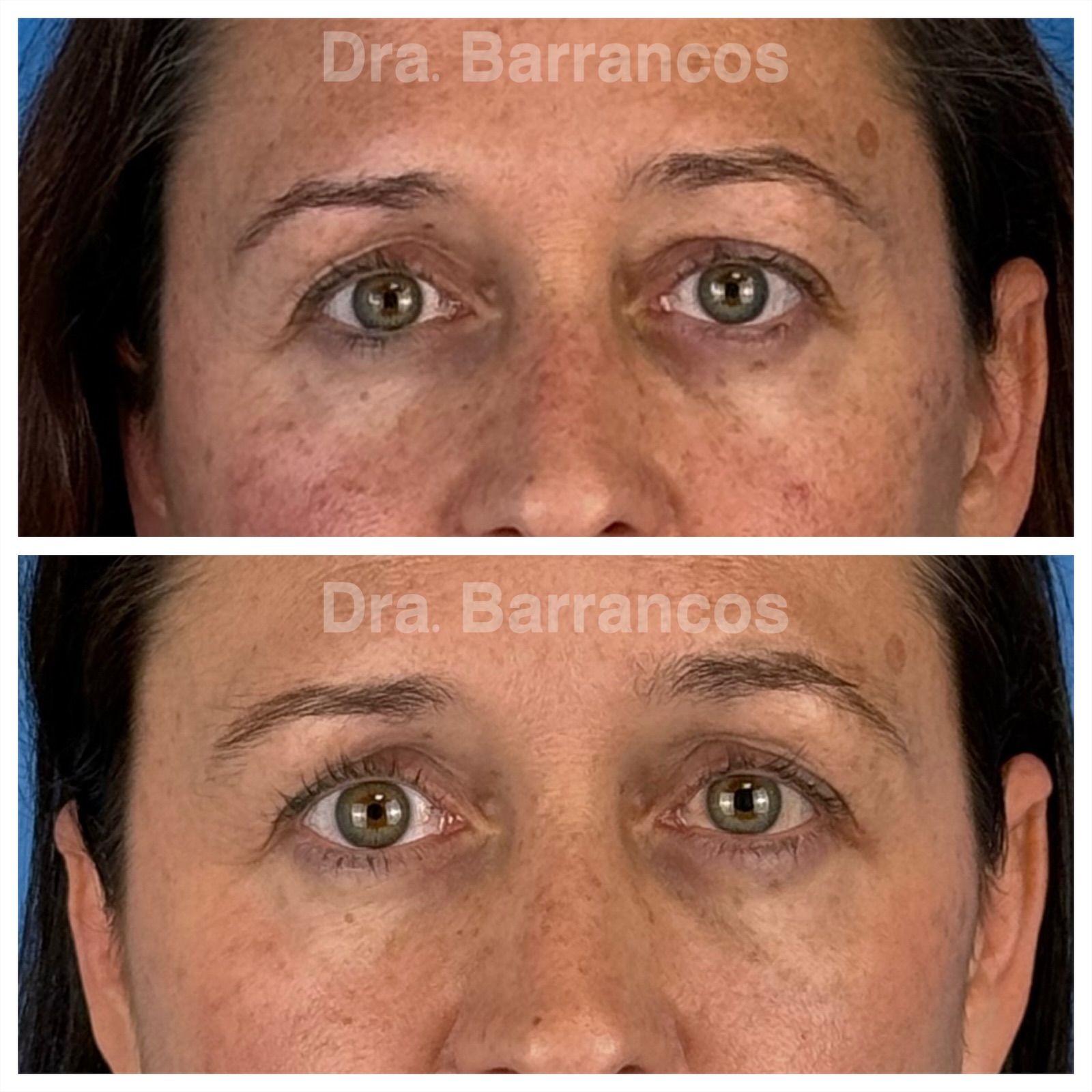
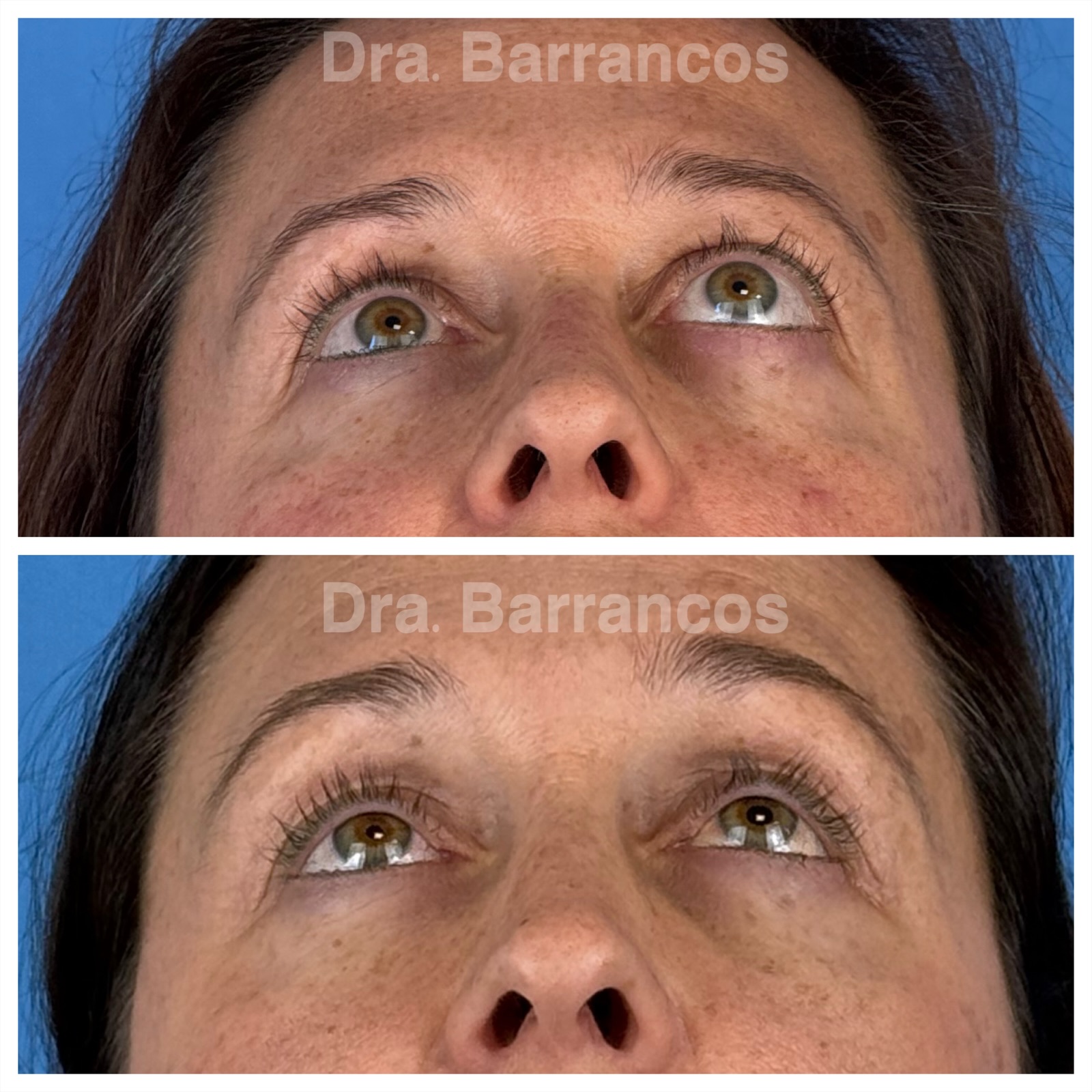
RESULTS
BEFORE AND AFTER
If you would like to see more results and videos of the process, follow me on Instagram
TESTIMONIALS
DO YOU HAVE ANY QUESTIONS?
- Unless essential, you should avoid taking anti-inflammatory drugs such as aspirin or ibuprofen for one week before surgery, as they prolong bleeding times.
- If you take antiplatelet or anticoagulant medications (Plavix, Adiro, Iscover, Sintrom, Heparin, etc.), please inform your surgeon and anesthesiologist to adjust the schedule or determine the suitability of the surgery.
- You must arrive at the operating room having fasted for 8 hours, without makeup, and avoiding jewelry and Lycra clothing.
- Bed rest is not necessary, but relative rest at home is recommended for the first 24–48 hours.
- Occlusion of one or both eyes for a period of no more than 12–24 hours is common. Upon uncovering, the eyelid will appear swollen, with a bruise of varying size and often bloody tears. From this point, the local treatment recommended by the surgeon will begin.
- A drain is usually left in place and removed during the 24-hour follow-up.
- The resulting bruising will depend primarily on each patient’s individual characteristics. It is not possible to know in advance.
- You may experience minor changes in vision, such as blurred vision and glare. You may also have tearing and a gritty sensation. These are temporary effects.
- You may experience double vision. This is usually temporary and resolves within the following days.
- You may experience a decrease in skin sensitivity in the periocular area. This is usually temporary and resolves within the following days.
- You should avoid alcohol consumption for the first 48–72 hours.
- You should avoid physical exercise during the first month.
- You should avoid makeup for the first two weeks.
- If you work from home, you may do so after 48–72 hours, avoiding exertion.
- You can usually return to your workplace after about 10–14 days.
- Stitches are removed after approximately one week. Small white spots may appear in the suture area, which are easily removed. It is recommended to avoid sun exposure and apply sunscreen.
- It is important to avoid sun exposure on the scar. While you have stitches, you can protect yourself with sunglasses. Once the stitches are removed, you should use high-factor sunscreen, even on cloudy days.
- Contact lenses can be used 7–10 days after surgery.
The results are essentially permanent.
To access the lateral wall of the orbit, an incision is made in the natural eyelid crease that extends slightly toward the lateral canthus. The resulting scar is usually barely visible.
The medial and inferior walls are accessed from inside the eyelids, so there are no visible scars

